Retail trade group expects to see slower rise in holiday sales
The National Retail Federation said its 2024 forecast indicates that shoppers will make $979.5 billion to $989 billion worth of purchases in November and December.
The survey bottomed out in June 2022, when inflation peaked at 9.1%, and has since risen by about 40%, though it remains significantly below pre-pandemic levels.
Excluding volatile food and energy costs, “core” prices, a gauge of underlying inflation, remained elevated in September, driven up by rising costs for medical care, clothing, auto insurance and airline fares.
Thirteen industries reported contraction in September, led by printing, plastics and rubber, and wood products. Five sectors expanded.
Business investment increased at a vigorous 8.3% annual pace last quarter, led by a 9.8% rise in investment in equipment.
The Conference Board, a business research group, said Tuesday that its consumer confidence index fell to 98.7 in September, from 105.6 in August. It was the biggest month-to-month decline since August of 2021.
Americans spent a bit more at retailers last month, providing a small boost to the economy just as the Federal Reserve considers how much to cut its key interest rate.
Dollar Tree shares tumbled 20% Wednesday after hitting a 52-week low on the prior day.
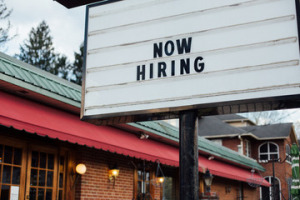
The number of job openings has been trending gradually down over the past year. Yet there are still roughly 1.1 job openings for every unemployed person, Wednesday’s report showed.
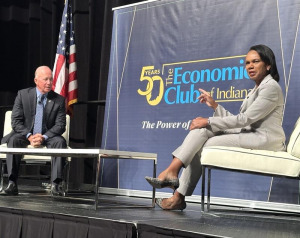
Wearing an Indiana Fever pin during a visit to Indianapolis, former Secretary of State Condoleezza Rice spoke to the Economic Club of Indiana in a conversation with former Indiana Gov. Mitch Daniels primarily focused on current issues in foreign policy.
The Commerce Department had previously estimated that the nation’s gross domestic product—the total output of goods and services—expanded at a 2.8% rate from April through June.
Consumers are still spending, but they’re being selective about where they make purchases when the costs of housing, food and other essentials remain inflated.
The government reported Wednesday that the economy created 818,000 fewer jobs from April 2023 through March 2024, in the biggest revision to federal jobs data in 15 years.
For nearly a year, cooling inflation has provided gradual relief to America’s consumers, who were stung by the price surges that erupted three years ago, particularly for food, gas, rent and other necessities.
Some of America’s largest companies say their customers are increasingly seeking cheaper alternative products and services, searching for bargains or just avoiding items they deem too expensive.
Nearly everything on Wall Street is tumbling Monday as fear about a slowing U.S. economy worsens and sets off another sell-off for financial markets around the world.
A report Friday showing hiring by U.S. employers slowed last month by much more than expected has convulsed financial markets, vanquishing the euphoria that had taken the Nikkei 225 to all-times highs of over 42,000 in recent weeks.
Friday’s report from the Labor Department showed that employers added 35% fewer jobs than forecasters had expected and the unemployment rate hit its highest level since October 2021.
Higher wages and benefits are good for employees, but slower pay growth will likely reassure Federal Reserve officials that inflation is steadily falling back to their 2% target.
American consumers felt more confident in July as expectations over the near-term future rebounded. However, in a reversal of recent trends, feelings about current conditions weakened.