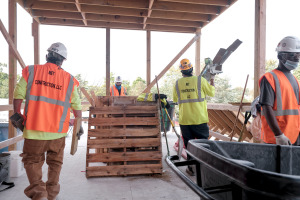
State pours $75M into novel career training fund
The Indiana Career Accelerator Fund will award financial aid to qualified students to use for training in high-demand, high-wage sectors that leads to an industry credential in six months or less.
Sawmills, veterinary clinics and psychologists’ offices are among the businesses gripped by escalating worker shortages, as employers in a few pockets of the economy step up competition for workers and sharply increase wages.
The service, announced Tuesday by the Indiana Governor’s Workforce Cabinet and Ivy Tech, will provide up to four months of one-on-one career coaching via not-for-profit InsideTrack.
The Hamilton County Council voted Wednesday to seed the proposed Hamilton County Center for Career Achievement’s first three years of planning with $425,000.
Ascension Technologies, the IT subsidiary of St. Louis-based Ascension, is outsourcing the jobs to overseas companies.
Since 1972, students from Hamilton County’s six high schools have traveled to the J. Everett Light Career Center in Indianapolis and the John Hinds Career Center in Elwood for career and technical education training. A coalition of educators wants the county to create its own vocational education system.
The hiring spree comes as the company gears up for Prime Day next month, its popular sales event that has become one of the busiest shopping days of the year for Amazon.
Many employers say they are unable to fill positions because of ongoing fears of catching the coronavirus, child-care responsibilities and generous unemployment benefits.
To nearly everyone’s surprise, employers in April added a comparatively paltry 266,000 jobs, down drastically from a gain of 770,000 in March, which itself was revised down from an initially much higher figure of 916,000.
The figures suggest that as the economy rapidly reopens, businesses are already providing higher pay and benefits to pull workers back into the job market.
Last month, hiring strengthened across the economy. Restaurants, hotels and bars—the sector that was most damaged by the virus—added 216,000 jobs. Construction companies, aided by better weather after severe storms in February, gained 110,000.
After a year of epic job losses, waves of coronavirus infections, and small business closures, numerous trends are brightening the outlook.
The funding would instead go to courses in areas that are typically higher paying, such as nursing, biomedical science and welding. But critics say eliminating popular programs would narrow students’ options.
Janet Yellen, the first woman to head the Federal Reserve and the U.S. Treasury Department, said “there is a cultural problem in the profession, and we need to change the culture.”
To better prepare graduates for college and well-paying jobs, IPS plans to revamp its high school career and college curriculum and drop programs that don’t lead directly to jobs.
For workers at GM and other automakers, the future could be perilous. The more environmentally focused plants of the future will need significantly fewer workers, mainly because electric vehicles contain 30% to 40% fewer moving parts than petroleum-run vehicles.
Indiana’s unemployment rate continued to improve in December, decreasing from 5.1% in November to 4.3% last month, according to numbers released Tuesday by the Indiana Department of Workforce Development.
Indianapolis Mayor Joe Hogsett on Wednesday announced turnover in the positions of chief of staff and deputy mayor of neighborhood engagement.
However, Indiana’s labor-force participation rate drooped from 63.1% in October to 62.9% in November. The rate indicates the percentage of all people of working age who are employed or are actively seeking work.
Indiana’s unemployment rate has been doggedly retracing its steps in recent months from 16.9% in April, when the pandemic paralyzed sections of the economy.