

Could 2022 be the year for marijuana legalization in Indiana?
Eyes will once again be on Indiana to see if lawmakers will loosen the state’s marijuana laws as neighboring states continue to cash in on legal weed.
Eyes will once again be on Indiana to see if lawmakers will loosen the state’s marijuana laws as neighboring states continue to cash in on legal weed.
House Speaker Nancy Pelosi’s upbeat comments came as President Biden and Democrats try to strike agreement soon on his big proposal, now about $1.75 trillion in social services and climate change programs
President Joe Biden mentioned during a televised town hall Thursday the challenge he faces in wrangling the sharply divergent factions in the Democratic party to agree to the final contours of the bill.
Members of the House on Tuesday pushed through a $480 billion increase to the nation’s debt limit, ensuring the federal government can continue fully paying its bills into December.
An Indiana state senator who spent 10 days in a hospital’s intensive care unit with COVID-19 says he stands behind his decision to not get vaccinated against the illness.
The $3.5 trillion price tag on the social services portion of President Biden’s agenda has long been the sticking point, with progressives demanding the funding for their priorities and moderates balking at the eye-popping number.
Violations will now result in four points against a driver’s license, BMV officials said.
The bipartisan package includes about $600 billion in new spending on highways, bridges, transit, broadband, water systems and other public works projects.
The package provides $343 billion for roads, bridges and safety programs, $109 billion for transit agencies and $95 billion for rail. It also includes $117 billion for drinking water programs and $51 billion for wastewater infrastructure.
Republican senators who brokered the agreement with the White House and Democrats to fund badly needed investments in roads, bridges, water and broadband indicated they were satisfied with President Biden’s comments that he was dropping the both-or-nothing approach.
Half of the total in the $6 trillion plan is expected to be paid for with Biden’s proposed taxes on corporations and those earning more than $400,000.
The bill would lead to Juneteenth becoming the 12th federal holiday. It is expected to easily pass the House, which would send it to President Joe Biden for his signature.

David Johnson, the president and CEO of the Central Indiana Community Partnership, also joins the podcast talk about how Indiana should prepare for the act’s passage.
The suit challenges a new law that gives the Legislature the power to call itself into a special session whenever the governor declares a state of emergency that “the legislative council determines has a statewide impact.”

Lawmakers are set to return to the Indiana Statehouse on Monday to make technical corrections—a session in which they could also vote to overturn two vetoes by Gov. Eric Holcomb, including one affecting orders issued by local health departments during a public health emergency.
State lawmakers came through in big ways for business and manufacturing interests this year.
The bill, which scales back protections on Indiana wetlands, had gained support from the Indiana Builders Association, but numerous environmental, conservation and civic groups opposed it.
The Indiana General Assembly concluded the year’s regular session late last week in Indianapolis. Here’s a look at some major issues debated during the nearly four-month session.
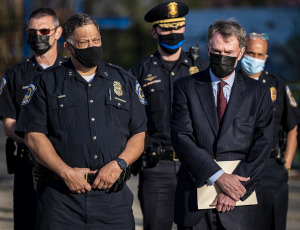
The Marion County Prosecutor’s Office has not said whether it sought to have Brandon Hole declared a dangerous person after a 2020 incident in which his mother told police he was suicidal. If a court had ruled he was dangerous, state law could have prevented him from buying another gun.
The bill would make it easier to sue employers over pay discrimination, curb the ability of companies to retaliate and include a requirement that businesses submit detailed pay data to the federal government for use in policing pay discrimination laws.