

NCAA tax records show ex-president Emmert paid nearly $3.3M in 2021
Overall, NCAA revenue increased 10% in the 2021-22 fiscal year, while its expenses rose 16%.
Overall, NCAA revenue increased 10% in the 2021-22 fiscal year, while its expenses rose 16%.

More than 40 athletes from the University of Iowa and Iowa State University could be facing discipline from both law enforcement and the NCAA for impermissible online wagering. The NCAA consequences could be far worse than the legal ones.
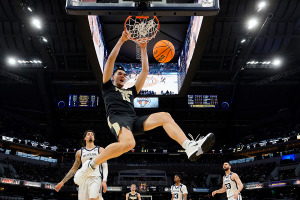
Zach Edey is the first player in NCAA history to finish a season with at least 750 points, 400 rebounds, 70 blocks and 50 assists in a season, but most projections don’t have him being selected in the first round of the draft.

March Madness may have been the last time for fans to see many of the talented college women players compete. Players’ options for professional basketball careers are limited, whether in the U.S. or overseas—the jobs just aren’t there.
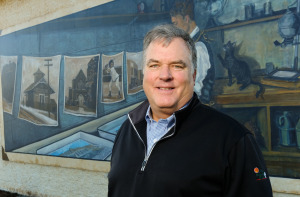
Steve Sanner is owner and president of Jiffy Lube of Indiana, which counts 51 locations and about 510 employees altogether.

Fifty years ago, Indiana University reached the Final Four of the NCAA Basketball Tournament with the first and unlikeliest of Bob Knight’s five Final Four teams.

College sports leaders have been calling for help in the form of a federal law to bring uniform regulation to the way athletes can earn money off their fame with sponsorship or endorsement deals.
Women’s basketball seems to have found a winner with its new Sweet 16 format in March Madness, and the timing couldn’t be better with looming TV contract negotiations on the horizon.

In his fifth season as head coach Florida Atlantic University, Dusty May has shepherded an anonymous program bereft of basketball history to the apex of the sport. His coaching journey began as a student manager for Coach Bob Knight in 1996.

The Indianapolis company specializes in selling vintage-themed T-shirts to fans of 150 universities, and surprising storylines have become a sure thing in the 68-team NCAA tournament.

The NCAA is expected to decide by the fall if the women’s tournament will become a separate entity after hiring Endeavor, a consulting firm, to determine how to take championships to market.

Coaches across college basketball are bolstering support staffs and looking at ways to evolve to deal with recruiting, roster management and athletes who can earn money.
The host Hoosiers (28-4) became the second No. 1 seed to be eliminated in two nights. It’s the first time since 1998 that two No. 1 seeds did not advance to the Sweet 16.
Defending national champion the University of Kansas and fellow No. 1 seed Purdue University are gone—the Boilermakers with a slice of unwanted history. The Sweet 16 won’t have blue bloods Kentucky, Duke or North Carolina for only the second time since 1979.
Indiana University Coach Mike Woodson gave all the credit to Miami, which held a 42-26 rebounding advantage.
Sydney Parrish scored 19 points and had eight rebounds to lead the top-seeded Indiana Hoosiers.
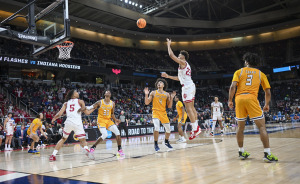
The fourth-seeded Hoosiers (23-11) advanced to play fifth-seeded Miami on Sunday for a trip to Kansas City for the Midwest Region semifinals.

For the third straight year, the Boilermakers were bounced by a double-digit seed, losing Friday night to No. 16 seed Fairleigh Dickinson.
The pay difference comes mainly from money flowing from so-called NIL collectives. Excluding the money from collectives, male and female basketball players made roughly the same amount of money from NIL deals.
For the first time in more than a decade, NCAA and college sports leaders are committed to a serious examination of increasing the number of teams allowed to compete in an event that has become one of the crown jewels of American sports.