

Trump administration asks Supreme Court to let DOGE access Social Security systems
Elon Musk, now preparing to step back from his work with the Department of Government Efficiency, has been focused on Social Security as an alleged hotbed of fraud.
Elon Musk, now preparing to step back from his work with the Department of Government Efficiency, has been focused on Social Security as an alleged hotbed of fraud.
Supporters say denying full public funding to religious public charter schools amounts to anti-religious discrimination since states allow full taxpayer funding to other types of charter schools.
The effect of the high court’s order will keep employees in six federal agencies on paid administrative leave for now.
The justices suggested the Catholic Charities Bureau should not have to pay unemployment taxes because the work of the social services agency is motivated by religious beliefs.
The U.S. Justice Department is fast-tracking fights over President Donald Trump’s efforts to push the bounds of executive power, teeing up key issues for the Supreme Court in the coming weeks or even days.
The students say Indiana University’s bias-response team stifles speech on campus by allowing anonymous reports about things that appear prejudiced or demeaning.
The outcome of the case could remove an additional requirement that some courts apply when members of a majority group, including those who are white and heterosexual, sue for discrimination under federal law.
While the Supreme Court is still expected to issue a ruling or order on the case this week, its continued silence has amped up the tension in years-long drama over the fate of TikTok.
States argue the laws are necessary as online porn, including hardcore obscene material, has become almost instantaneous to access on smartphones online.
The Supreme Court on Friday will take up TikTok’s high-stakes challenge to a federal law that would effectively shut down the wildly popular video-sharing platform this month unless the company divests from Chinese ownership.
Five of the nine justices said President-elect Donald Trump’s immunity concerns about evidence presented at his trial can be addressed “in the ordinary course on appeal.”
If the government prevails as it did in a lower court, TikTok says it would shut down its U.S. platform by Jan. 19, leaving creators scrambling to redefine their futures.
Thomas has agreed to follow updated requirements on reporting trips and gifts, including clearer guidelines on hospitality from friends, the U.S. Judicial Conference wrote.
Supreme Court Chief Justice John G. Roberts Jr. on Tuesday warned that judges nationwide are under increasing threat from violence, intimidation, disinformation and officials threatening to defy lawful court decisions.
The justices will hear arguments Jan. 10 about whether the law impermissibly restricts speech in violation of the First Amendment.

The court said it would take up a business-backed appeal that could make it easier to challenge federal regulations.
The justices heard arguments in November in Meta’s bid to shut down the lawsuit. On Friday, they decided that they were wrong to take up the case in the first place.
The justices rejected a push from Republican-led states and industry groups to block the Environmental Protection Agency rule, marking the third time this month the conservative majority has left an environmental regulation in place for now.
The legislation by Sen. Ron Wyden (D-Ore.) is one of the most ambitious proposals to remake a high court that has suffered a sharp decline in its public approval after a string of contentious decisions and ethics scandals in recent years.
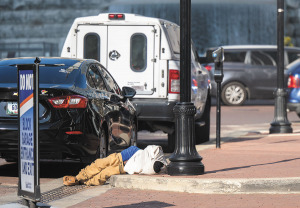
The city of Indianapolis says it has no plans to change the way it deals with homeless residents, despite a recent U.S. Supreme Court ruling that allows cities to move, ticket or arrest people sleeping on the streets.