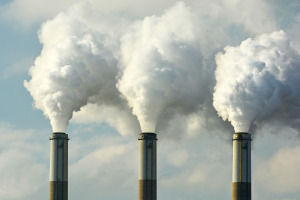
Supreme Court to hear challenge to EPA rule limiting downwind power plant pollution in 10 states
The rule is being challenged by three energy-producing states—Ohio, Indiana and West Virginia—as well as industry groups and individual businesses.
Conservative and liberal justices voiced concerns that ruling for a couple challenging a provision of the 2017 tax bill would threaten other provisions of the tax code.
The agreement hammered out with state and local governments and victims would provide billions of dollars to combat the opioid epidemic. The decision also has implications for other major product liability lawsuits settled through the bankruptcy system.
The policy, agreed to by all nine justices, does not appear to impose any significant new requirements and leaves compliance entirely to each justice.
Indiana and Arkansas have filed similar lawsuits, while the U.S. Supreme Court prepares to decide whether state attempts to regulate social media platforms such as Facebook, X and TikTok violate the Constitution.
Even some conservative justices sounded skeptical of arguments that the agency, created after the 2008 financial crisis to regulate mortgages, car loans and other consumer finance, violates the Constitution in the way it is funded.
Thousands of Black, Latino and other minority business owners are scrambling to prove that their race puts them at a “social disadvantage” after a federal judge declared a key provision of a popular Small Business Administration program unconstitutional.
Thursday’s decision means settlement money meant for thousands of victims and their relatives and for local and state governments could be delayed.
The Indiana Builders Association said the Supreme Court ruling provides builders and developers “more certainty in the federal permitting process,” and called the decision “a win for common-sense regulations and housing affordability.”
The court held that the administration needs Congress’ endorsement before undertaking so costly a program.
In a defeat for gay rights, the Supreme Court’s conservative majority ruled Friday that a Christian graphic artist who wants to design wedding websites can refuse to work with same-sex couples.
In Indiana, state leaders and others are already worried about the declining college-going rate, which is especially low for Black and Hispanic and Latino students.
The Supreme Court sided in part with a Sabbath-observant mail carrier who quit the U.S. Postal Service after he was forced to deliver packages on Sundays.
After Tuesday’s decision, voting rights advocates and Democrats said the combined opinions give them hope of being able to successfully challenge some Republican-led redistricting efforts.
To guard against a chilling effect on non-threatening speech, the majority said, states must prove that a criminal defendant has acted recklessly, meaning that he “disregarded a substantial risk that his communications would be viewed as threatening violence.”
The high court has 10 opinions left to release over the next week before the justices begin their summer break. The last opinions to be released cover some of the most contentious issues.
In a narrow, unanimous ruling, the justices sent back to a lower court the case testing the line between trademark protections and free-speech rights.
It was a stunning loss for Marion County’s Health and Hospital Corp.—the state’s leading nursing home operator—and a surprise victory for patients, advocates and those who participate in other federal safety net programs.
As the Supreme Court decides the fate of affirmative action, colleges nationwide are bracing for setbacks that could erase decades of progress on campus diversity.
The outcome almost certainly will affect ongoing court battles over new wetlands regulations that the Biden administration put in place in December. Two federal judges have temporarily blocked those rules from being enforced in 26 states.