
Subscriber Benefit
As a subscriber you can listen to articles at work, in the car, or while you work out. Subscribe Now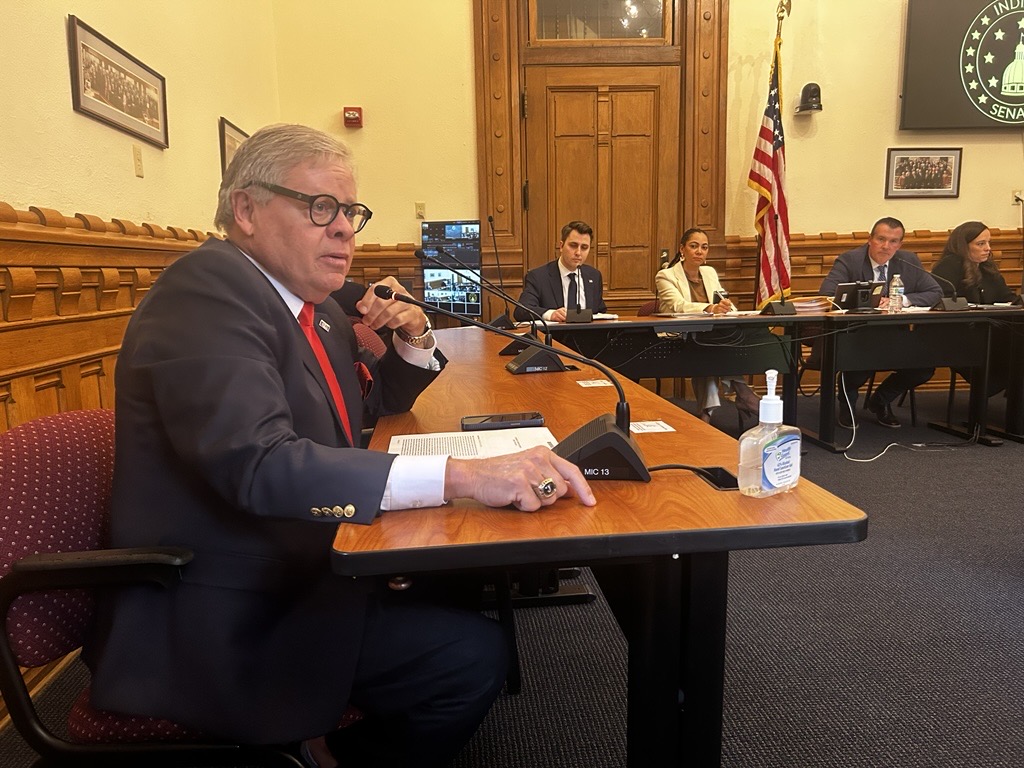
Indiana lawmakers removed a controversial public camping ban from an unrelated piece of legislation in a conference committee Thursday, citing a Senate relevancy rule. But, they warned, it could come back.
House Bill 1662 would have made camping on public property a misdemeanor offense, but its author, Rep. Michelle Davis, R-Whiteland, chose not to call the bill down by the House’s mid-February deadline, essentially killing the legislation.
Then, earlier this month, members of the House quickly amended language similar to that of HB 1662 into Senate Bill 197, prompting some lawmakers and advocates for the homeless to voice concerns about the lack of public notice regarding the change.
This week, the Senate dissented to the House’s changes and sent the bill into conference committee.
Sen. Aaron Freeman, R-Indianapolis, who authored SB 197, told the committee Thursday that none of the House’s changes would stay in the legislation, citing the Senate’s germaneness rule, which prohibits any amendments or changes that are not relevant to the bill’s intent. Since SB 197 focused on civil penalties related to unsafe buildings, the House’s changes have been axed, he said.
Freeman announced the decision at the start of the conference committee, indicating that the caucus had slashed the language behind closed doors. He warned that it doesn’t mean the end of the proposal altogether.
“For those playing along, I’m sure it’ll end up in another bill,” Freeman said. “Because if somebody wants it, they’re going to find a home for it. But it will not be in Senate Bill 197.”
He later noted that House bills are not subject to the same germaneness rule.
The legislation would have made sleeping on public property a criminal offense only if the individual refuses to move within a certain period of time and refuses services that are required to be offered by a police officer. Law enforcement joined the faith and nonprofit leaders in asking lawmakers to vote against the legislation, and advocates argued that police involvement isn’t the right approach to solving an issue as complex as homelessness.
Addressing his colleagues Thursday, Sen. Ron Alting, R-Lafayette, asked for compassion in legislation relating to people living on city streets and said the government’s role is to “support them, not to go against them.”
He added: “I hope that’s the end of this bill, but I suspect—since there are politicians in the building and not statesmen or stateswomen, all of them—we’ll probably see it somewhere else.”
The committee’s move gives critics of the ban a brief reprieve. However, bills are quickly moved and changed in the final days of the session. Lawmakers have to adjourn by April 29.
Andrew Bradley, senior director of policy and strategy for Prosperity Indiana, told IBJ in a written statement that “bringing back this zombie language would be bad process,” because it hasn’t received any testimony in the Senate or within any existing House bills.
“Indiana can’t afford to overload our jails and hospitals by criminalizing homelessness,” Bradley said. “Instead, Indiana’s elected officials have the opportunity to better align existing funding to increase the supply of safe, affordable housing and services for the most vulnerable Hoosiers.”
The camping ban in HB 1662 was tied to a Texas-based think tank. The Austin, Texas-based Cicero Institute has lobbied several states to ban street camping and direct funds away from “housing first” programs, which prioritize finding permanent housing and offering support services, but not requiring their use as a condition of an individual’s housing.
Several other states, including Kentucky and Oklahoma, have passed similar model legislation from Cicero into law.
Please enable JavaScript to view this content.
Editor's note: You can comment on IBJ stories by signing in to your IBJ account. If you have not registered, please sign up for a free account now. Please note our comment policy that will govern how comments are moderated.