Growing costs, especially for Medicaid, could make it more difficult for Republican leadership to achieve a key goal: spending less than the state takes in.
Multiple people familiar with the real-time conversations said the next step remains unclear, as leaders would need significant support from both parties—and Donald Trump—to pass a funding extension.
A day before a potential government shutdown, the House resoundingly rejected President-elect Donald Trump’s new plan Thursday to fund operations and suspend the debt ceiling, as Democrats and dozens of Republicans refused to accommodate his sudden demands.
Senate Tax and Fiscal Policy Chair Travis Holdman, R-Markle, said his caucus is ready to introduce between 12 and 15 bills that will affect property taxes.
Hours before the start of a possible federal government shutdown, President-elect Donald Trump doubled-down on his insistence that the debt ceiling be increased or eliminated.
House Speaker Mike Johnson had insisted Congress would “meet our obligations” and not allow federal operations to shutter ahead of the Christmas holiday season.
Many of the priorities related to K-12 that Republican leaders outlined for next year, like expanding school vouchers and limiting property tax hikes, come with a price tag.
A lot of Americans, after an intense election, are looking for a break in political news. That’s evident in cable television news ratings and a new poll.
As Trump previews a hard-line immigration policy including militarized mass deportation of illegal immigrants, many in the tech industry are pushing him to expand legal immigration for high-skilled workers.
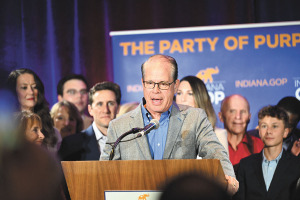
The cornerstone of Braun’s campaign was his promise to use his business experience to lead Indiana. And on election night, he doubled down on campaign promises to cut government spending and pass a balanced budget.
Braun and running mate Micah Beckwith won handily—54% to 41%—over Democrat Jennifer McCormick, who had previously been elected state superintendent of public instruction as a Republican.
The economic enhancement district is projected to raise $4.65 million a year in taxes to pay for downtown-focused improvements and programs and fund the operating costs of a low-barrier homeless shelter planned on the southeast side of downtown.
The Food and Drug Administration is on the cusp of deciding whether to ban a controversial bright cherry-red dye that has been linked to cancer in animals.