
Stellantis warns of car market collapse if EVs don’t get cheaper
One of Europe’s biggest automakers warned after a landmark deal to phase out combustion engines that the industry is doomed unless electric vehicles get less expensive.
One of Europe’s biggest automakers warned after a landmark deal to phase out combustion engines that the industry is doomed unless electric vehicles get less expensive.
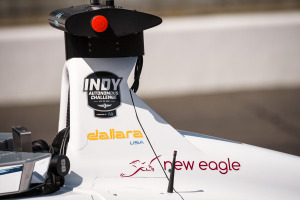
The IEDC has contributed $3.4 million toward creating the Indy Innovation Challenge, to encompass both the Indy Autonomous Challenge and potential future competitions focused on performance automation technology.
In a letter to leaders of the Senate and House of Representatives on Monday, the chief executives of Ford, Toyota, GM and Stellantis asked that tax credits be extended to anyone who seeks to buy a qualified vehicle.
Goodyear wouldn’t recall the tires even as late as March of this year, despite investigators finding that their failure caused crashes that killed eight people and injured 69 others from 1998 through 2009.
Automaker Stellantis has reached a deal to have Controlled Thermal Resources Ltd. supply battery-grade lithium hydroxide for its electric vehicles in North America.
Ford CEO Jim Farley predicted big cost reductions are coming with new battery chemistries that use fewer expensive and scarce precious metals such as nickel and cobalt. Plus, EVs will take less time and labor to build, saving more money, he said.
Podcast host Mason King talks with Ananth Iyer, a professor of management at Purdue’s Krannert School of Management, who is part of a group studying the potential disruption in the auto industry and how Indiana manufacturers can adapt.

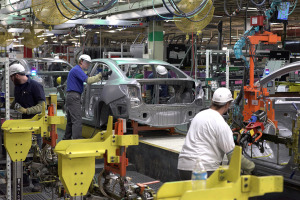
The state’s five automotive assembly plants, and the suppliers who serve them, produce 1.3 million cars and trucks per year, employing just more than 110,000 workers. But the vast majority of that work focuses on gas-powered vehicles.
The Indiana Economic Development Corp. laid out a substantial incentive package to lure the joint venture, with tax credits and investments totaling at least $186 million.
Stellantis officials said the clean energy requirement was a critical part of the agreement to locate the operation in Indiana.
The companies said the investment could grow to $3.1 billion as Stellantis—formed last year with the merger of Fiat Chrysler and France’s PSA Peugeot—ramps up production of electric vehicles.
Regulators said that the driver’s and front passenger’s seat belt pretensioners can explode upon deployment and send shrapnel throughout the vehicle.
Automaker Stellantis said it will give an update on the future of its Kokomo operations at an Indiana community college on Tuesday afternoon.
Cars on U.S. roads are as old as they’ve ever been, potentially complicating efforts to expand the use of new safety and emissions-reduction technologies.
The forecast comes as Europe and North America look to reduce their dependency on Chinese imports and develop their own lithium production. China has enjoyed a stranglehold over the lithium supply chain.
GM has set a goal of building only electric passenger vehicles by 2035. It has pledged to have 30 electric vehicle models for sale globally by 2025.
Kentucky Gov. Andy Beshear said Envision AESC’s plan to build a 2,000-employee plant will help make Indiana’s southern neighbor the “undisputed electric battery production capital of the United States of America.”
Efforts in North America will focus on the collaboration with General Motors Co., under which Honda Motor Co. is jointly developing two midsize to large EV models, set for sale in 2024.
The all-solid-state battery is stable enough to be used in pacemakers, Nissan said. When finished, it will be about half the size of the current battery and fully charge in 15 minutes, instead of a few hours.
The lack of credits is problematic for automakers shifting from petroleum-powered vehicles to batteries in the effort to reduce emissions, meet government fuel-economy standards and fight climate change.