
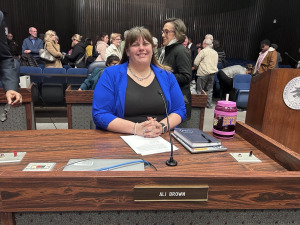
Ali Brown elected vice president of Indianapolis City-County Council
Brown, who represents District 10 in the northeast corner of Marion County, replaces former councilor Zach Adamson in the role of second in command
Brown, who represents District 10 in the northeast corner of Marion County, replaces former councilor Zach Adamson in the role of second in command
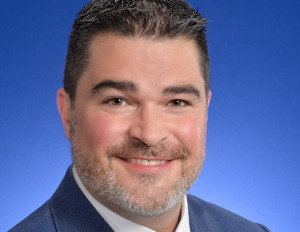
In an interview with IBJ, the outgoing council vice president reflected on his time as the first openly gay leader to hold countywide office in Indianapolis and on his efforts to improve landlord accountability, animal welfare and environmental protection.
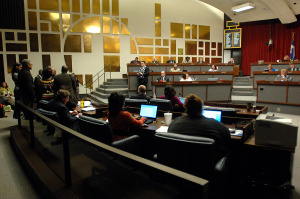
Six Democratic councilors-elect, and one Republican, make up the freshman class that will take office Jan. 1. Democrats will have a 19-6 majority on the Indianapolis City-County Council.

The council also approved tens of millions of dollars in bonds to support the redevelopment of Old City Hall, a demolition of the former Jail I building and renovation of portions of the City-County Building. Also passed Monday was a plan to create a study commission on the use of artificial intelligence.
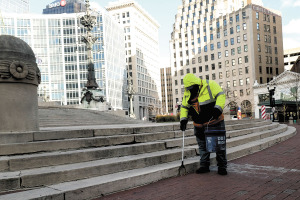
A new proposal to impose a fee on downtown property owners for initiatives aimed at public safety, cleanliness and homelessness in the Mile Square is gaining steam among Democrats on the City-County Council.
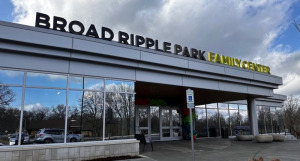
A City-County Council committee on Tuesday unanimously recommended approval of a measure that would allow up to $26 million to be spent to acquire the new Broad Ripple Park Family Center.

The proposal from Republican Councilor Michael-Paul Hart, which would create a study commission on the city’s usage of AI, was passed unanimously by the Rules and Public Policy Committee.

The City-County Council Metropolitan and Economic Development Committee heard testimony from over a dozen downtown residents and representatives of prominent companies before passing the proposal, 8-3.
If approved, the bonds are expected to pay for the demolition to demolish a former Marion County Jail 1 and renovate portions of the City-County Building ahead of a planned consolidation of city employees from satellite offices.

The proposal would result in a $250 flat fee on owners of single-family, residential parcels, while other properties would be charged 0.1681% of assessed value.
Election results show Democrats capturing 19 of the council’s 25 seats and Republicans gaining one post.

The race for an open seat pits 23-year-old Democratic upstart Nick Roberts against Republican Natalie Goodwin, a 34-year-old mother of three.

All five Republicans and the City-County Council’s lone independent joined Democrats in approving the record-setting budget proposed by Indianapolis Mayor Joe Hogsett.
Marion County voters will have a choice for local representation in 15 of the 25 City-County Council districts in the Nov. 7 election. The other 10 seats are uncontested. IBJ has identified four races considered to be the most in play.
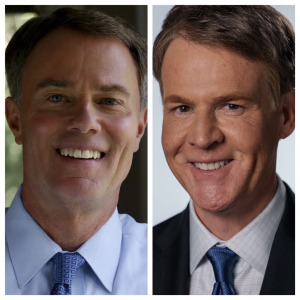
Indianapolis Mayor Joe Hogsett’s proposal to create a city office prioritizing diversity efforts was met with “no” votes from some City-County Council Republicans. But Hogsett’s GOP mayoral opponent Jefferson Shreve wouldn’t rule out the concept if his public safety funding priorities could be met first.
The proposal would give Park Indy the opportunity to accrue more revenue by ticketing for non-meter-related offenses.
The Indianapolis City-County Council passed two gun-violence-related proposals Monday evening, but one of them calling for stricter gun-control regulations won’t be enforceable under state law.
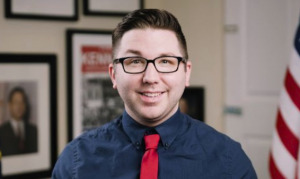
Potts, a Democrat in his first term on the City-County Council, works with several local not-for-profit arts organizations.

The Republican-dominated Legislature has given the city a way to raise money for downtown’s post-pandemic revitalization, but there appears to be little chance that Democratic city leaders will pursue it before the November city election.

The mayor’s plan includes hiring three attorneys who would be detailed to the U.S. Attorney’s Office and prosecute federal gun crimes. Republicans say that’s needed because the county prosecutor isn’t doing enough.