Lilly to test obesity drugs for addiction treatment, CEO says
Lilly also approved a program to buy back as much as $15 billion of its own shares amid rapid growth fueled by Zepbound and Mounjaro.
Roche is developing the tests in partnership with Indianapolis-based Eli Lilly and Co. Earlier this year, the U.S. Food and Drug Administration granted a breakthrough device designation to the product.
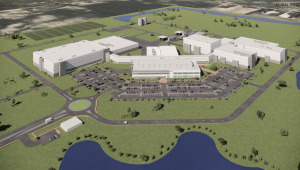
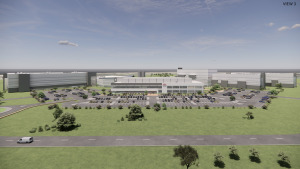
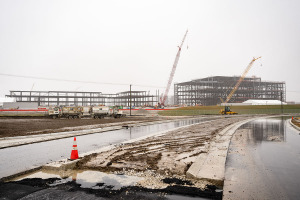
Under pressure to keep up with soaring demand for drug treatments for obesity, diabetes and other diseases, Eli Lilly and Co. is planning its single largest U.S. manufacturing investment outside of Indiana.
Eli Lilly and Co. said its weight-loss treatment Zepbound helped patients lose 47% more relative weight than competitor Novo Nordisk’s obesity treatment Wegovy in a head-to-head clinical trial.
While the proposed rule would give millions of people access to weekly injectables like Eli Lilly and Co.’s Zepbound that have helped people shed pounds, it would cost taxpayers as much as $35 billion over the next decade.
The money will go to start three programs designed to give students real-world business experience along with their classroom experience.
Eli Lilly and Co. plans to set up a $31 million digital health innovation hub in Singapore, expanding its research and development in the city-state.
Ricks is being recognized for his contributions to Indiana’s life sciences sector and his global impact on health care innovation.
The Indianapolis-based drugmaker missed expectations on sales of two popular drugs, diabetes treatment Mounjaro and weight-loss treatment Zepbound, which it attributed to inventory decreases in the wholesaler channel.
Britian’s National Institute for Health and Care Excellence said more evidence was needed to prove Kisunla’s worth. Lilly says a year’s worth of treatment is $32,000.
The U.S. Food and Drug Administration said it would not take enforcement action—for now—against pharmacies making their own versions of weight-loss drugs based on Eli Lilly’s tirzepatide.
Two new drugs—including one from Indianapolis-based Eli Lilly—and better detection methods offer promise for people dealing with the disease.
Lilly wants to know how to improve new medicines and speed them to market more quickly. The project promises hundreds of high-paying jobs and could help lift Lilly among a handful of the most valuable companies in America.
In recent years, the pharmaceutical manufacturer has seen dizzying growth in its pipeline for a wide range of diseases. And modes of drug delivery are becoming increasingly complex.
The plaintiffs allege that the shortage of Lilly’s drugs isn’t actually over, and that the agency’s decision deprives patients of important medicines by restricting compounding.
Lilly has been making the case since August that its tirzepatide-based drugs are now “commercially available,” which the FDA agreed on. But the agency warned that patients and prescribers might still experience “localized supply disruptions.”
The new funding, for an advanced manufacturing and drug development center, will bring the Indianapolis-based drugmaker’s total investment in the Boone County site to more than $13 billion.
The the Swiss drugmaker will face off in the obesity area with leaders Novo Nordisk A/S and Indianapolis-based Eli Lilly and Co.
Recurrent shortages, shifting insurance coverage, indecision and a lack of guidance about side effects and dosing have led to challenges for some patients prescribed Mounjaro, Ozempic, Zepbound or Wegovy.
The Indianapolis-based drugmaker filed a suit in federal court this month, challenging the U.S. Food and Drug Administration’s ruling that the company’s experimental obesity treatment not a biological product.