Next challenge for U.S. charging network: congestion
From a potential congestion standpoint, the U.S.’s charger-to-EV ratio is one of the worst in the world.
The Citizens Energy-Lebanon Utilities project is one of several water and wastewater improvement efforts around the state that could be funded through $500 million in bonds approved by the Indiana Finance Authority.
A new water study released Monday by the Indiana Chamber of Commerce says the state has a “plentiful” but unevenly distributed water supply that will require a coordinated effort to manage in the future.
The investment would make AES Indiana the first utility in Indiana to abandon the use of coal as a fuel source, if state regulators agree, the company said.
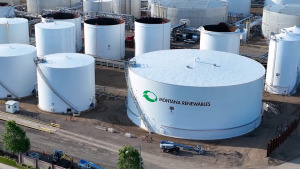
The EPA is issuing the emergency waiver to help alleviate gasoline shortages in four Midwest states after the shutdown of a refinery in Illinois.
Duke Energy Indiana, the state’s largest electric utility, in April filed a request with state regulators for permission to raise rates by about 16% over two years.
The National Highway Traffic Safety Administration said in a statement Wednesday that certain GM vehicles from the 2012 through 2018 model years did not comply with federal fuel economy requirements.
Three energy-producing states—Ohio, Indiana and West Virginia—challenged the rule, along with the steel industry and other groups, calling it costly and ineffective.
Senate Enrolled Acts 1 and 6 address one of the most heavily debated topics of the 2024 legislative session: reading skills and proficiency among Indiana youth.
Three energy-producing states—Ohio, Indiana and West Virginia—have challenged the air pollution rule, along with the steel industry and other groups, calling it costly and ineffective.
A company spokeswoman told IBJ that the new workforce reductions are related to Destination Zero—the company’s previously announced goal of achieving zero emissions by 2050.
Midcontinent Independent System Operator, which serves Indiana, 15 other states and a Canadian province, could face a capacity deficit as soon as next summer.
For better or worse, America’s energy future will be determined by political considerations as much as market conditions since all energy sources generate external costs that are not fully incorporated into market prices.
The Indiana Finance Authority, at Gov. Eric Holcomb’s behest, assumed control of an Indiana Economic Development Corp. water study connected to development of the controversial LEAP district.
The company said Thursday that it’s already replaced 95% of the plastic air pillows with paper filler in North America and is working toward complete removal by year’s end.
Without an additional source, Lebanon cannot currently offer water to companies and developers looking to build in the city who have not already reserved allocations.
The Indiana Office of Energy Development wants to hear from involved stakeholders—especially contractors, property managers, homeowners, renters and other interest groups—about how to craft a plan that is effective in its mission and reach.
In the five years since lawmakers approved generous financial incentives specific to data centers, eight have located in Indiana. Four announcements have come in the last six months alone.
Longtime business partners Robert Laikin and Larry Paulson, who made their fortunes in the cellphone industry, are turning their sights to manufacturing high-density batteries for industrial uses.
Worries about cost are widespread, as are other practical concerns. Range anxiety—the idea that EVs cannot go far enough on a single charge and might leave a driver stranded—continues to be a major reason why many Americans do not purchase EVs.