Massive gambling bill sails through Indiana House
Senate Bill 552 would legalize sports wagering, permit a Gary casino to relocate from Lake Michigan to a more convenient interstate location and allow a new casino in Terre Haute.
A top Indiana budget writer doesn't expect much of a state tax revenue boost if legislators approve proposals to legalize sports betting and allow new casinos in Gary and Terre Haute.
The owner of two casinos now located on Lake Michigan in Gary would still be allowed to move one of them to a more convenient interstate location under changes to a gambling bill lawmakers made Tuesday—but only if the company gave its other license back to the state.
For a variety of reasons, most of the states that moved quickly to legalize sports betting after the Supreme Court cleared the way are still waiting for the expected payoff.
An Indiana casino CEO treated Gov. Eric Holcomb to two private jet flights last year and made big contributions to Holcomb’s largest 2016 campaign donor, all while he was pushing for changes to state law that would benefit his business, according to a newspaper report.
State lawmakers significantly amended a major gambling bill on Wednesday, removing language that would have allowed mobile sports betting and adding a huge relocation fee for the owner of the Gary’s casinos.
The House Public Policy Committee heard roughly five hours of testimony on Senate Bill 552—legislation that touches nearly every aspect of gambling in Indiana—during a hearing on Wednesday.
The Indianapolis-based NCAA is preparing for its first basketball championships since the Supreme Court allowed legal sports betting to expand. Its board of governors will be considering new gambling policies at its next several meetings.
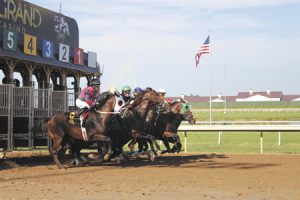
The legislation would legalize sports wagering, let horse-track casinos add table games this year as opposed to waiting until 2021 and allow two Gary casinos to move.
Spectacle Entertainment—a company founded by some of the same investors that operated Centaur before it was purchased by Caesars Entertainment—is in the process of buying Gary-based Majestic Star Casino I and Majestic Star Casino. It has said it wants to move one of the casinos to the Interstate 80/94 corridor and the other to Terre Haute.
Caesars owns four of Indiana’s highest-revenue casinos and any sale would need approval from the Indiana Gaming Commission and Indiana Horse Racing Commission.
One of Gary’s two casino licenses could be allowed to operate at any location in Indiana under new legislation. A previous bill limited the casino move to Vigo County.
Senate Bill 552, authored by Jasper Republican Mark Messmer and Terre Haute Republican Jon Ford, would allow the casinos in Gary to relocate, accelerate when horse-track casinos could begin offering live table games and legalize sports gambling.
The bill, filed by Republican Sens. Mark Messmer and Jon Ford, covers a wide range of gambling issues expected to be debated this year.
Several states—but not Indiana—moved to authorize online gambling after an Obama administration decision appeared to allow it. Now, the Justice Department is reversing that opinion.
The Indiana General Assembly is likely to consider a proposal that would allow Gary’s two casino licenses to be relocated this year—one would stay in Gary, while the other could move to another city in the state.
IBJ reporter Lindsey Erdody talks with host Mason King about the sports gambling legislation that will be considered in the Indiana House and Senate this year, including the many details that could complicate passage.
Hate-crimes legislation and increasing teacher pay might be the big talking points at the Indiana Statehouse this session, but it’s a safe bet that gambling will stir up a few debates, too.
Returns in states that have already approved of sports betting have been modest so far. And experts say revenue is likely to be diluted overall as more and more states jump into the game.
The court in a unanimous ruling rejected the claims of former players Akeem Daniels and Cameron Stingily of Northern Illinois University and Nick Stoner of Indiana University, who argued the companies violated their right of publicity.