
French Lick Resort plans $17 million expansion project
The six-story addition will add 56 guestrooms and a sports bar to the southern Indiana tourist destination.
The six-story addition will add 56 guestrooms and a sports bar to the southern Indiana tourist destination.
In late July, the Indiana Gaming Commission entered into a two-year contract with Eilers & Krejcik Gaming LLC, a market analysis firm specializing in the nation’s burgeoning sports wagering industry.
The Indianapolis-based NCAA plans to study how the expansion of legalized betting could affect college athletics and member schools.
The company’s $1.7 billion purchase of Indianapolis-based Centaur Gaming and its Hoosier Park and Indiana Grand horse racing casinos was earlier approved by the Indiana Gaming Commission.
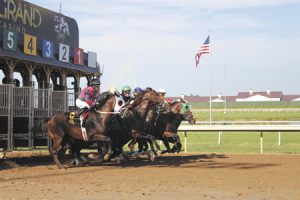
The Las Vegas-based casino company will soon own Indiana Grand in Shelbyville and Hoosier Park in Anderson, the state’s only two casinos with horse-racing tracks.
The deals approved Thursday change ownership at Hoosier Park in Anderson, Indiana Grand in Shelbyville, Belterra Casino Resort in Switzerland County and Ameristar Casino in East Chicago.
At the same meeting in which Caesars Entertainment received approval for its $1.7 billion acquisition of Hoosier Park and Indiana Grand, the Indiana Gaming Commission hit the casino giant with one of the biggest fines it has ever issued.
The Indiana Horse Racing Commission gave approval Wednesday to Caesars Entertainment Corp.’s plan to acquire Hoosier Park in Anderson and Indiana Grand in Shelbyville. The deal still needs approval from the Indiana Gaming Commission.
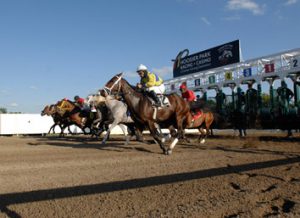
The owner of two horse track casinos near Indianapolis is preparing to pay a $50 million state fee as part of its sale to casino giant Caesars Entertainment Corp.
The governing body for college sports on Thursday announced a "temporary" lifting of a ban that prevents events like college basketball’s NCAA tournament from being hosted in states that accept wagers on single games.
Now that the U.S. Supreme Court has cleared the way for states to legalize sports betting, the race is on to see who will referee the multibillion-dollar business of gambling on pro and college games.

The U.S. Supreme Court ruled Monday that states can legalize sports betting. Indiana lawmakers will likely study the issue before their 2019 session.
The U.S. Supreme Court has struck down a federal law that bars gambling on football, basketball, baseball and other sports in most states, giving states the go-ahead to legalize betting on sports. The Indianapolis-based NCAA was fighting New Jersey in the case.
Caesars sought approval for the plan despite threats to cancel the project if the state did not waive a $50 million fee tied to its acquisition of racinos in Anderson and Shelbyville.
Gov. Eric J. Holcomb on Friday named Indianapolis attorney Michael McMains to the position.
The American Gaming Association, which favors full legalization and regulation of sports betting, found 54 million people — or about a quarter of the U.S. adult population — participated in a sports betting pool last year.
If the Indiana Gaming Commission doesn’t agree with Caesars, a proposed $90 million project in Indiana by the Las Vegas-based company could be dropped.
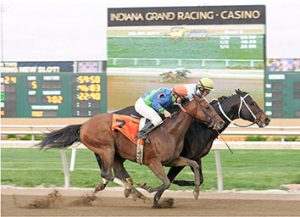
Centaur, which owns and operates Hoosier Park Racing & Casino in Anderson and Indiana Grand Racing & Casino in Shelbyville, said its 2,000 or so employees would receive the checks next week.
The Pokagon Band of Potawatomi Indians is set to open the Four Winds Casino South Bend to the public on Tuesday, joining three other casinos the tribe already operates nearby in southwestern Michigan.
If the deals are approved, Penn National will take over Ameristar Casino in East Chicago, and Boyd Gaming will take over Belterra Casino in Switzerland County.