
Inflation cooled unexpectedly in November
The report lands at a moment of growing uncertainty about the broader economic outlook, with job growth slowing sharply in recent months.

The report lands at a moment of growing uncertainty about the broader economic outlook, with job growth slowing sharply in recent months.
Core inflation was muted in September and will bolster the case for a cut to the Federal Reserve’s key interest rate at its next meeting.
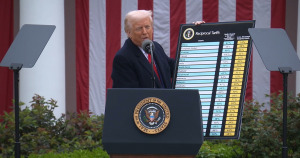
Trump has built his second term in part around imposing steep levies on goods imported into the U.S. in hopes of encouraging domestic production and lifting the U.S. economy.

The data for Friday’s report was gathered before Oct. 1, but price data for October isn’t being gathered due to the government shutdown, and the Trump administration suggested Friday that an inflation report won’t be released next month.
The minutes provide insight into how the Fed’s policymakers were thinking last month about inflation, interest rates, and hiring.
The increases in the Commerce Department’s personal consumption expenditures, or PCE, price index were what forecasters had expected.
At this week’s Federal Reserve meeting, the decision it will make on interest rates—usually the main event—is just one of the key unknowns to be resolved when officials gather Tuesday and Wednesday.
The reading is the last the Federal Reserve will receive before its two-day meeting that begins Tuesday, where policymakers are widely expected to cut their short-term rate.

The drop in producer prices makes it even more likely that the Federal Reserve will cut its benchmark interest rate next week for the first time this year.

Fast food visits by lower-income consumers dropped by double-digit percentages industrywide in the second quarter, McDonald’s said.
The report showed that consumer spending picked up last month and could boost economic growth.

Federal Reserve Chair Jerome Powell opened the door ever so slightly to lowering a key interest rate in the coming months but suggested the central bank will proceed cautiously as it continues to evaluate the impact of tariffs and other policies on the economy.

U.S. wholesale inflation surged unexpectedly last month, signaling that the president’s sweeping import taxes are pushing costs up and that higher prices for consumers may be on the way.
Americans are likely to absorb more trade-war costs in the coming months as Trump begins to finalize tariffs.

Other financial stressors—like the cost of housing or the amount of money in their bank accounts—weigh more heavily on younger Americans, according to polling.

Cocoa prices have more than doubled over the past two years due to poor weather and disease in West Africa, which supplies more than 70% of the world’s cocoa.

Wholesale prices in June saw their smallest year-over-year gain since September, the Labor Department reported Wednesday.
The price increases in June were broad-based, affecting imports such as cosmetics, shoes and toys, as well as services like medical care, car insurance and education.

The cost of a cookout in Indiana is slightly higher than that of the national average, according to Indiana Farm Bureau.

Consumer sentiment has also fallen sharply this year in the wake of the sometimes-chaotic rollout of President Donald Trump’s tariffs.