
Boy Scouts’ $2.4 billion bankruptcy plan upheld by judge
The plan would let the organization keep operating while it compensates tens of thousands of men who say they were sexually abused as children while involved in Scouting.
The plan would let the organization keep operating while it compensates tens of thousands of men who say they were sexually abused as children while involved in Scouting.
William Barrett leads the Litigation Group and is head of the Government Services and Banking Services groups for Williams Barrett & Wilkowski in Greenwood.

Town of Speedway officials and residents on Monday night learned a development firm involved in its long-delayed $36 million Wilshaw hotel project purposely withheld details of a settlement reached last year with federal securities regulators.
Stifel is suing a newly-formed competitor firm, Sapient Capital, alleging that Sapient conducted an “orchestrated raid” of Stifel’s 96th Street office, convincing nearly all the employees to jump ship and attempting to bring their clients and their $10 billion in assets with them. Sapient characterizes the situation differently.

U.S. Solicitor General Elizabeth B. Prelogar requested the court step in. But conservatives also urged the court to act.

House Bill 1087, authored by Rep. Justin Moed, D-Indianapolis, would require the Indiana Department of Correction—with some exceptions—to return offenders to the county where they lived when they were convicted.

Although the proposal advanced 8-0, lawmakers cautioned that the bill still needs more work. More amendments are expected in the full chamber.

In January 2020, the federal government filed a lawsuit against Community Health Network, alleging the system engaged in a years-long scheme to recruit physicians and pay them huge salaries and bonuses in return for referrals. The two sides are still battling in court.

The Supreme Court on Tuesday will hear oral arguments in Gonzalez vs. Google, a lawsuit that argues tech companies should be legally liable for harmful content that their algorithms promote.
The 13 plants where violations were found were in Arkansas, Colorado, Indiana, Kansas, Minnesota, Nebraska, Tennessee and Texas.
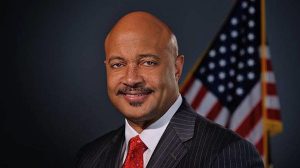
Former Indiana Attorney General Curtis Hill has secured another victory in the yearslong legal fallout from accusations that he drunkenly groped four women at a party

Former Vice President Mike Pence and his attorneys are planning to cite constitutional grounds as they prepare to resist special counsel Jack Smith’s efforts to compel his testimony before a grand jury.

McAfee, who played for the Colts from 2009 to 2016, is owner of Indianapolis-based digital media production company Pat McAfee Inc.

Chief Judge Tanya Walton Pratt disagreed, writing in her order that the complaint “is devoid of facts that any defendant acted to create or enhance a danger Chris Beaty otherwise would not have faced.

The settlement comes more than three years after the U.S. Securities and Exchange Commission filed suit against former Celadon executives Eric Meek and Bobby Peavler.

The state Supreme Court issued an order Monday saying the state Court of Appeals will first consider the case, after a lower court judge in December sided with residents who claim the state’s abortion ban infringes on their religious beliefs.
A top state lawyer on Thursday urged the Indiana Supreme Court to uphold the state’s Republican-backed abortion ban, even as the justices weighed whether they should decide its constitutionality before lower courts have fully considered the case.
The ACLU said it stands by its arguments that the Indiana law violates federal Title IX protections—and indicated that it could file future legal challenges on behalf of other transgender students.

The residents say the city of Lebanon failed to follow state zoning law when it annexed 5,200 acres of land for the planned LEAP district in Boone County.

The decision comes nearly two years after a local voting rights activist made a push for the document to be released. Barbara Tully originally asked the attorney general’s office for a copy of the opinion, but the office denied her public records request.