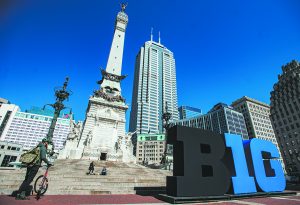
Local tourism, convention officials prepare for impact from coronavirus
Officials say no events have been canceled locally, but groups—including the NCAA and Visit Indy—are watching the news and weighing their options.
The Federal Reserve’s latest nationwide survey of business conditions has found that the coronavirus outbreak has begun to affect tourism and disrupt manufacturing chains in parts of the United States.
The cancellations and travel restrictions are a major blow to business travel, which makes up around 26% of the total travel spending. The Global Business Travel Association estimates the virus is costing the business travel industry $47 billion per month.
The legislation came together unusually quickly, a rarity in a deeply polarized Washington. It triples the $2.5 billion plan unveiled by President Donald Trump just last week.
An advocacy group for college athletes has urged the Indianapolis-based NCAA to consider holding its winter sports championships with no fans, and the idea has not been dismissed out of hand.
The trade-only event scheduled for March 14-17 had been expected to draw 60,000 visitors and 2,200 exhibitors from 45 countries.
A growing number of employers have restricted international travel and are now considering what they might need to do within the U.S.
Big technology companies like Apple are still among the most vulnerable due to disruptions in supply chains and business closures in China, but the sector led the way higher Monday.
No one is certain about the possible ramifications of the current coronavirus, but virologists say there are clues from other similar outbreaks in the recent past.
In question is how much effect rate cuts will actually have amid a health emergency that threatens to reduce both supply and demand in the economy.
Officials from the National Basketball Association, National Hockey League and Major League Baseball say they are all consulting with the Centers for Disease Control and Prevention and other organizations on a regular basis about COVID-19.
The market clawed back much of its intraday losses in the last 15 minutes of trading. Bond prices soared as investors sought safety, pushing yields to record lows.
U.S. stock markets saw more major declines Friday morning. Traders have been growing increasingly certain that the Federal Reserve will be forced to cut interest rates to protect the economy, and soon.
If the disease known as COVID-19 becomes a global pandemic, economists expect the impact could be much worse, with the U.S. and other global economies falling into recession.
President Donald Trump’s choice of Vice President Mike Pence to oversee the nation’s response to the new coronavirus threat is bringing renewed scrutiny to Pence’s handling of an HIV outbreak in southern Indiana when he was governor.
Health experts don’t know how far the virus will spread and how bad the crisis will get, yet stocks are rallying as if investors are expecting no more than a modest hit to the global economy.
Technology companies led U.S. stocks higher in midday trading Monday as global markets mostly calmed down following a sharp sell-off last week over worries about the spreading virus outbreak in China.
China’s central bank announced plans Sunday to inject 1.2 trillion yuan (about $173 billion) into the economy to cushion the shock to financial markets from the outbreak of the new virus when trading resumes Monday.
Delta Air Lines and American Airlines are the first U.S.-based airlines to do so and join several international carriers that have stopped flying to China as the coronavirus outbreak continues to spread.
With the release of the feature film “Dark Waters” on Tuesday, the law firm Taft Stettinius & Hollister, which has offices in Indianapolis and eight other cities, is about to get the kind of publicity that money can’t buy.