
U.S. won’t impose rule to protect against coal ash spill costs
Environmental Protection Agency officials said Tuesday that modern industry practices and recently enacted regulations are sufficient to shield taxpayers from potential cleanup costs.
Environmental Protection Agency officials said Tuesday that modern industry practices and recently enacted regulations are sufficient to shield taxpayers from potential cleanup costs.
More than 800,000 customers of Duke Energy Indiana could see their monthly bills jump if the utility receives state permission to increase rates for the first time in about 15 years.
The move comes as companies are turning to newer genetic engineering techniques that make it easier to tinker with the traits of plants and animals.
The cost of Indiana environmental permits on everything from incinerators to wastewater-treatment plants is just a fraction of what nearby states charge.
The utility had wanted to build the gas-fired plant to replace aging coal-burning units, but regulators said the plan was too risky and inflexible.
Scott Pruitt, the scandal-ridden former head of the Environmental Protection Agency, registered Thursday as fossil-fuels interests in the state fight to block the proposed closure of several coal-fired power plants.
The House voted 53-38 Thursday to strip language that would have prohibited the state from approving new power plants for two years, a move widely seen as delaying construction of renewable energy projects.
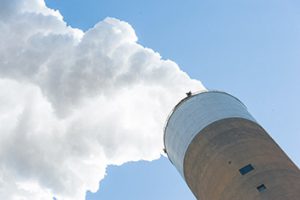
The House Utilities Committee advanced legislation this week along party lines that would prohibit state regulators from approving any large new power plants until 2021. Environmentalists and utilities say the move could interrupt the transition from coal to renewable fuels and natural gas.

The industry is retiring coal-fired plants in favor of cheaper energy sources, including gas, solar and wind.
Cleanup options include excavating ponds or capping the ponds and keeping the ash in place. Both methods require steps to be taken to protect the water quality of nearby rivers or lakes.
Under pressure from Congress, the Environmental Protection Agency said Thursday it would move toward setting safety limits for a class of highly toxic chemicals contaminating drinking water around the country.
The Environmental Protection Agency is looking at how to respond to a public push for stricter regulation of perfluoroalkyl and polyfluoroalkyl compounds, in production since the 1940s.
The EPA’s acting administrator signed a proposal that would loosen rule that would have required cutting-edge carbon capture techniques for new coal plants. Andrew Wheeler said the requirements were “excessive burdens” on the industry.
The Truck and Engine Manufacturers Association, which represents Indiana-based Cummins Inc. and other engine manufacturers, said the proposal represents a chance to modernize how the agency oversees big-rig emissions.
The discovery comes less than a year after Indiana officials renewed the company's air pollution permit, despite concerns from residents.
According to the air permit application, the plant would have annual emissions of about 2.2 million tons of carbon dioxide, 225 tons of carbon monoxide and 120 tons of sulfur dioxide.
The utility is seeking a nearly 17 percent rate increase to help pay for more than $542 million of infrastructure investments.
The state of New York is blaming 49 industrial sites in Indiana—and hundreds of other sites across the Midwest—for causing it to miss ozone air-pollution requirements.
Maryland contends the power plants in Indiana, Kentucky, Ohio, Pennsylvania and West Virginia are violating the “good neighbor” provision of the Clean Air Act.
The site is called the Broadway Street Corridor Groundwater Plume. Officials have reported finding contaminated groundwater with concentrations of trichloroethene, tetrachloroethene and other chemicals.