
Indiana unemployment in holding pattern above pre-pandemic rate
Indiana’s unemployment rate has been hovering at or near 4% for the last sixth months. It was 3.3% in March 2020, just before the pandemic triggered wide-scale layoffs and job losses.
Indiana’s unemployment rate has been hovering at or near 4% for the last sixth months. It was 3.3% in March 2020, just before the pandemic triggered wide-scale layoffs and job losses.

The U.S. Census Bureau says data needed for Indiana lawmakers to redraw the state’s legislative and congressional districts will be ready Aug. 16, and legislative leaders are planning to hold hearings across the state that month to receive public input on the once-a-decade task.
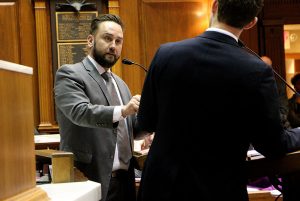
Forestal resigned from his Indiana House seat about a year ago, saying he was struggling with mental health issues. He also faced several criminal charges related to alcohol and resisting arrest.

Overall tax collections came in about 14% higher than a year ago, giving Indiana a surplus of almost $3.9 billion and triggering a tax refund.
The Indiana Court of Appeals ruled Monday that the state temporarily continue payment of federal unemployment benefits, affirming an earlier court order that Indiana must restart the extra $300 weekly payments to unemployed workers.
Attorneys for the state maintain Indiana can’t continue paying out the benefits because the state has already ended its agreement with the federal government to administer the federal programs.
The 144-page complaint filed late Wednesday in a Northern California federal court represents the fourth major antitrust lawsuit filed against Google by government agencies across the U.S. since last October.

Total Wine & More, a Maryland-based chain of liquor superstores, opened its first Indianapolis location late last year in Nora after winning a high-profile court battle.
Judge Patrick Dietrick wrote in the ruling dated Saturday that such an interpretation would give the attorney general greater power than the governor in protecting the governor’s constitutional powers.

Indiana’s state parks, forests and trails—long starving for cash and maintenance—will receive money for improvements at nearly 50 state properties and the first new state park inn in more than 80 years.
Indiana’s delegation is scheduled to leave Indianapolis on Monday, July 5, and return Friday, July 9.

Sullivan—who took a high-profile role in statewide televised weekly press conferences during the pandemic—will be departing after the longest tenure of any secretary in the Indiana Family and Social Services Administration’s 30-year history.

The 24-member NCAA Division I Board of Directors is expected to approve the historic recommendation Wednesday, the eve of the July 1 date that athletes rights advocates have been pointing toward with anticipation for months.

The Indiana Career Accelerator Fund will award financial aid to qualified students to use for training in high-demand, high-wage sectors that leads to an industry credential in six months or less.
The latest numbers show Hoosiers filed 4,641 initial unemployment claims during the week ended June 12, a drop of 465 from the previous week.

More than 541,000 free COVID-19 tests have been provided at an OptumServe site since May 6, 2020, the state said last week, when it announced it was closing the vendor’s testing sites at the end of June.
The service, announced Tuesday by the Indiana Governor’s Workforce Cabinet and Ivy Tech, will provide up to four months of one-on-one career coaching via not-for-profit InsideTrack.
At its peak, OptumServe, a division of health care insurance giant UnitedHealth Group, provided testing in 53 counties. Currently, 30 counties have an OptumServe testing site.
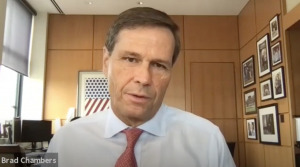
Brad Chambers said he believes a “reevaluation of what the marketplace is doing” by the Indiana Economic Development Corp. will be a good thing—and a natural move for any agency or company when it changes leadership.
Brad Chambers, who founded Indianapolis-based powerhouse development firm Buckingham Cos. in 1984, will take his new position July 6. He’ll succeed Jim Schellinger, who stepped down abruptly in March after 5-1/2 years on the job.