Return of medical-device tax dismays firms across state
The medical-device industry will see a resumption of the 2.3 percent federal excise tax beginning this month, following a two-year moratorium that expired Dec. 31.
Indiana Sen. Todd Young said he believes the tax bill “is going to give a major boost to our economy, creating an environment that’s ripe for jobs and small business growth.” Two months ago, he said he was concerned with overestimating growth potential.
U.S. Sen. Claire McCaskill is asking the Indianapolis-based insurer to turn over a huge array of internal documents, explaining how it reached its decision to deny certain emergency room claims.
The epic overhaul of U.S. tax laws offers generous tax cuts for corporations and the wealthiest Americans while providing smaller cuts for middle- and low-income families. It’s projected to increase the national debt while potentially boosting economic growth.
After midnight—as protesters interrupted with chants of "kill the bill, don't kill us"—the Senate narrowly passed the legislation on a party-line 51-48 vote.
A wide range of economists and nonpartisan analysts have warned that the bill will likely escalate federal debt, intensify pressure to cut spending on social programs and further widen America's troubling income inequality.
The April 23 event will come two weeks before Indiana’s May 8 primary.
A burst of 11th-hour horse trading gave a party starved all year for a major legislative triumph the votes it needed.
U.S. Reps. Todd Rokita and Luke Messer, former state Rep. Mike Braun, and two others have so far filed to face off in the GOP primary next spring.
The senator from Indiana said fellow Republicans “can’t assume unreasonable rates of economic growth or we’re being fiscally irresponsible.”
The plan repeals the estate tax and alternative minimum tax, lowers the corporate tax rate, and reduces the number of tax brackets while lowering the highest tax rate. One of the largest boons for the middle class would be that it doubles the standard deduction.
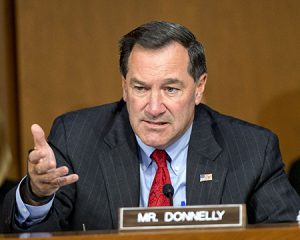
Sen. Joe Donnelly is considered one of the most vulnerable Democratic senators on 2018 ballots. That’s drawn U.S. Reps. Luke Messer and Todd Rokita into a nasty feud for the Republican nomination.
U.S. Sen. Joe Donnelly of Indiana is holding strong against would-be challengers when it comes to fundraising ahead of what’s sure to be a competitive 2018 race.
Indiana Sen. Joe Donnelly railed against Carrier Corp. for moving manufacturing jobs to Mexico last year, even as he profited from a family business that relies on Mexican labor to produce dye for ink pads, according to records reviewed by The Associated Press.
Indiana hospitals are bracing for congressional action that could mean deep cuts in Medicaid, which funds the state’s popular health insurance program for low-income adults.
Leigh Ann Pusey will join Eli Lilly and Co. next month as senior vice president for corporate affairs and communications.
Five years of progress reducing the number of Americans without health insurance has come to a halt. It will be watched closely as Republicans attempt to roll back the Affordable Care Act.
Indiana Republicans have more than 18 months before they attempt to unseat vulnerable Democrat U.S. Sen. Joe Donnelly in the 2018 midterm election, but the race is already heating up.
Messer is in his third term representing central Indiana’s 6th District and is a potential challenger to Democratic Sen. Joe Donnelly.
For years, medical-device makers in Indiana and around the nation have insisted that the 2.3 percent tax on sales to help fund the Affordable Care Act has hurt business and slowed innovation.