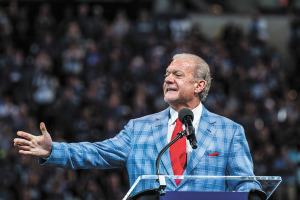
Colts owner Jim Irsay praised by PETA for embracing vegan lifestyle
The animal-rights organization this week promoted a video of a discussion with Irsay, who lives a vegan lifestyle, about his expanded involvement in animal activism.
Jefferson Shreve rolled out a detailed plan Tuesday to improve Indianapolis Animal Care Services, one day after Mayor Joe Hogsett revealed his own agenda for helping the city’s crowded, understaffed animal shelter.
BiomEdit LLC was set up last year by Greenfield-based Elanco Animal Health and Boston-based Ginkgo Bioworks to make everything from food to therapeutics for animals. It’s already raised $36.5 million in venture capital for its work.
A heated debate over whether the state should restrict municipalities from banning the retail sale of dogs continued Monday at the Indiana Statehouse without resolution.
Fred Cate, IU’s vice president for research, informed federal officials that the research group had “a pattern of non-compliance” and had been warned several times against using expired materials.
Shares in the animal health care company have lost more than two-thirds of their value in the past 18 months, but Elanco says a bevy of new products in its pipeline will prove an era of strong growth is yet to come.
If approved, the legislation would interfere with a proposal banning dog, cat and rabbit retail sales—introduced just this month—making its way through the Indianapolis City-County Council.
Several Indianapolis City-County Council members are seeking to ban most local retail sales of cats, dogs and rabbits in an effort to prevent an expansion of puppy mills and reduce overcrowding and understaffing at the city animal shelter.
Company leaders hope to eventually have one VetCheck center for every 30 traditional veterinary offices in any given area.
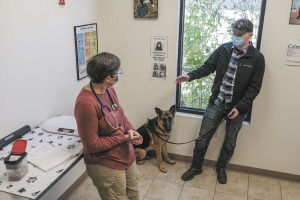
Shorthanded veterinary clinics are being slammed by the high number of pets acquired during the pandemic and a worsening shortage of workers, from support staff to veterinarians themselves.
Here’s how beagles being bred for research by an Indianapolis-based company became the target of the largest animal welfare seizure in the Humane Society’s history.
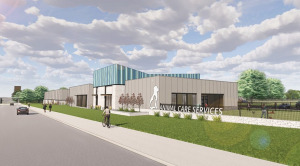
The Indianapolis Animal Care Services project previously received an $18 million commitment from the city’s Circle City Forward initiative.
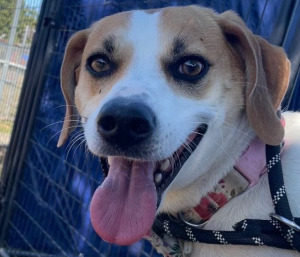
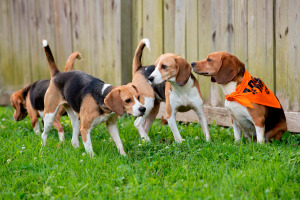
Prince Harry and Meghan, Duchess of Sussex, have adopted one of 4,000 beagles that were rescued from abusive conditions at the breeding facility operated by Indianapolis-based Envigo.
Indiana-based pharmaceutical testing company Inotiv Inc. disclosed late Monday that it expects to incur charges of between $7.4 million and $9.9 million for the previously announced shutdowns of two Virginia animal-breeding facilities.
As part of the settlement, Indianapolis-based Envigo will relinquish 4,000 beagles at a dog-breeding facility to the Humane Society of the United States, or HSUS.
The West Lafayette-based pharmaceutical testing company has seen its stock price soar—and later plunge—following its announcement last fall that it planned to acquire Indianapolis-based Envigo RMS LLC, which breeds and sells animals used in lab testing.
City Councilor Adam Aasen said he wanted to make a proactive move to ensure animals from puppy and kitten mills can’t be sold in Carmel in the future.
A federal judge issued an emergency order late last month imposing a series of restrictions on the facility operated by Indianapolis-based Envigo after regulators said the site was responsible for the deaths of hundreds of beagle puppies.
U.S. District Judge Norman Moon said the evidence from federal inspections shows more than 300 beagle puppies have died at the facility, which is owned by Indianapolis-based Envigo, over the last seven months of unknown causes.
Repeated federal inspections since Envigo acquired the facility have resulted in dozens of violations, including findings that dogs had received inadequate medical care and insufficient food, were housed in filthy conditions, and some had been euthanized without first receiving anesthesia.