
Indianapolis to host men’s Final Four in 2029
The selection marks the tenth time Indianapolis has won a bid to host the college basketball championship event, one that has become an integral part of the city’s sports DNA.
The selection marks the tenth time Indianapolis has won a bid to host the college basketball championship event, one that has become an integral part of the city’s sports DNA.

The event will be returning to Indianapolis that year after an extensive hiatus. The city last hosted the women’s March Madness finale in 2016.
An eight-month review of the women’s basketball championship included looking into moving the semifinal and championship games to an alternate weekend from the men’s Final Four.
Tom Jernstedt, long dubbed the “Father of the Final Four,” died in September at age 75. His widow, Kris, has scheduled a “celebration of life” at 2 p.m. at Gainbridge Fieldhouse on Saturday.
Having a combined Final Four was one of the recommendations from a report issued last August stemming from inequities between the men’s and women’s basketball tournaments.
Host Mason King talks with IBJ sports business reporter Mickey Shuey and with Michelle Perry, a former NCAA executive and now a sports consultant, about what a combined Final Four event could mean for the city of Indianapolis, women’s basketball and the sport’s fans.

The NCAA’s efforts to address equity imbalances could lead to a joint championship site later this decade, with Indianapolis believed to be a likely contender for hosting such a spectacle.
Combining the tournaments was one of the recommendations stemming from an external review of gender equity issues of the tournaments.
We hoteliers welcome the business that the NCAA has brought but worry about what the future holds. To use a metaphor many people are experiencing these days, the tournament was a shot in the arm, but does not inoculate us against continued losses.
With the NCAA Men’s Basketball Tournament, we were able to show that Downtown Indianapolis is just as vibrant as ever. Now, don’t retreat back inside as basketball fans leave our fair city.
I can confidently say that bringing the buzz of college basketball back to our city was only possible through the everyone’s efforts to mask up, socially distance, and operate within the constructs of necessary public health orders. We must not let up now.
From seemingly small issues of inequality in NCAA Tournament weight rooms to life-and-death issues of police brutality and endemic racism, athletes are increasingly calling for change, intent on molding what the future should look like for everyone.
The meeting Monday is one most hoops fans have waited for all year — two years, really — a matchup between two teams who have been on a collision course since the bracket came out.
The showdown between Baylor and Gonzaga that was called off in December because of the coronavirus pandemic is finally back on, with the biggest stakes of all: The two best teams all season will play for the national championship Monday night.
The only reason Baylor’s backcourt can’t be considered a true brotherhood is the blood coursing through their veins.
At age 84, the affable, silver-haired Bobby Plump remains one of the state’s top basketball ambassadors and nothing, not a pandemic or an unprecedented NCAA Tournament, can keep those yearning to meet him away.
This is the 41st time I have attended the Final Four. I have never seen anything like this version. And I hope never to see anything like it again.
Health officials said Saturday they are investigating whether anyone was exposed to COVID-19 by Alabama residents following Friday night’s death of a fan who had been in Indianapolis for March Madness.
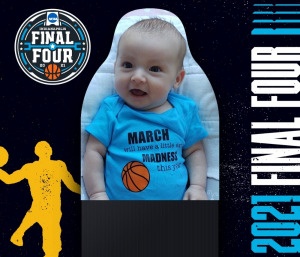
After a surprise delivery five weeks early in December, feisty 3-month-old Molly Skolnick of Carmel will be represented at the Final Four by a seat-filling cutout as part of an April Fools ruse concocted by her parents.
Fortune magazine reported that ticket prices are 145% higher than any other Final Four in history. Brokers say the prices would be even higher if a Midwestern team was in the final rounds.