
Home Health Depot acquired by Florida-based Lincare
Home Health Depot became one of the country’s fastest-growing medical companies under the leadership of former equipment sales rep David Hartley and ex-Indiana Commerce Secretary Nate Feltman.
Home Health Depot became one of the country’s fastest-growing medical companies under the leadership of former equipment sales rep David Hartley and ex-Indiana Commerce Secretary Nate Feltman.
The grant from the Indianapolis-based philanthropic giant is aimed at bolstering Indiana’s stature as a life sciences research hub.
The Gallup-Sharecare Well-Being Index, published Monday, found that the uninsured rate among U.S. adults was 11.7 percent in the second three months of this year, compared with a record low of 10.9 percent at the end of last year.
Drugmakers like Eli Lilly and Co. plunged off a patent cliff earlier this decade, losing billions in sales as lucrative branded drugs lost exclusivity. An expensive lobbying effort aimed at preventing a repeat is paying off.
Britain's Supreme Court has ruled in favor of Eli Lilly and Co. in a patent dispute with generic drugmaker Actavis over Lilly's Alimta cancer treatment.

The scale is small, and that’s what St. Vincent Health sees as a big selling point to its newest hospital: convenience and quick care—15 minutes or less to see a doctor, and just a few minutes from home for people who live in Noblesville.
An Indiana State Department of Health report shows 7,277 abortions were performed in the state last year, representing an 8.5 percent drop from 2015.

Eli Lilly and Co. announced the “strategic research collaboration” Thursday morning, calling it the largest agreement of its kind between Purdue and a single company.
The new sites are located at health centers in Johnson, Allen, Vigo, Monroe and Tippecanoe counties, the Indiana Family and Social Services Administration announced Wednesday morning.
Noblesville-based Pharmakon had a history of making state and local incentive agreements before suspending operations last year after a Food and Drug Administration investigation uncovered safety issues and possible criminal activity.
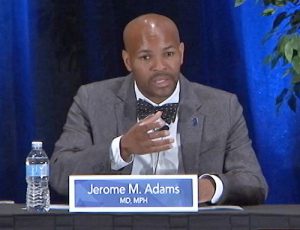
Dr. Jerome Adams was first appointed state health commissioner in October 2014 by then-Gov. Mike Pence. He has focused on issues such as the state’s opioid epidemic, high infant mortality rate and high rate of smoking.
Under the new agreement, Walgreens will buy 2,186 stores, three distribution centers and related inventory from Rite Aid for about $5.18 billion in cash.
The Indianapolis-based health insurer, a one-time Obamacare stalwart, has accelerated its retreat in recent weeks.
The co-owner of a pharmacy responsible for the deaths of 76 people was sentenced Monday to nine years in prison. Indiana was one of the state hit hardest by the 2012 nationwide fungal meningitis outbreak.
As medicines—especially those that treat conditions such as anxiety or depression—are becoming more complex, it’s not just the mix of active ingredients that generic drugmakers have to replicate. It’s also the release mechanism.
Anthem Inc. has agreed to pay $115 million to resolve consumer claims over a 2015 cyber-attack that compromised data on 78.8 million people, marking what attorneys in the case called the largest data-breach settlement in history.
While making opioid prescriptions harder to get, Indiana’s crackdown helped spur a twofold increase in robberies of pharmacies that exacerbated the state’s standing as No. 1 in the nation for those crimes.
The companies say the drug, now in late-stage clinical trials, could be more effective for pain treatment than opioids—a dangerous category of pain killers that includes hydrocodone, morphine and fentanyl—without the abuse potential of such medications.
The Indiana Department of Insurance has yet to approve the insurers’ proposed higher rates, which will be for those buying individual plans on the Affordable Care Act marketplace next year.
The owner and the director of compliance for Noblesville-based Pharmakon Pharmaceuticals Inc. have been charged with multiple criminal counts related to the sale of over-potent compounded painkillers that sickened at least three infants.