

Former head of Eskenazi burn unit sues IU Health, IU medical school
A prominent Indianapolis surgeon is suing Indiana University and Indiana University Health, claiming they broke his contract and interfered with his ability to get another job.
A prominent Indianapolis surgeon is suing Indiana University and Indiana University Health, claiming they broke his contract and interfered with his ability to get another job.
Declines were seen almost across the board in patient service categories, including hospital admissions, surgeries, ER visits, radiological exams, due in part to a government order to shut down elective procedures for several months.
U.S. hospitals face up to $122 billion in lost revenue this year as the pandemic continues its rampage, threatening to push more critical-care centers into bankruptcy or out of business entirely.
The hospitals, including six in the Indianapolis area, will be docked millions of dollars by the Centers for Medicare & Medicaid Services for high rates of infection or patient injuries.

As hospitals and health departments scramble to erect temporary clinics, the big questions are how fast states can roll out the vaccines and how long it will take for people to get protected.
Vice President-elect Kamala Harris took up Dr. Moore’s cause on Tuesday, saying the complaints of Black women are “often downplаyed or ignored in our health care system.”
Dennis Murphy, the president and CEO of Indiana University Health, has asked an external team to review the case.
In an unusual show of solidarity, officials from several major Indianapolis-area health care systems held a joint press conference Monday afternoon to issue dire warnings about the most recent surge in COVID-19 cases and explain how their facilities and staffs are close to becoming overwhelmed.
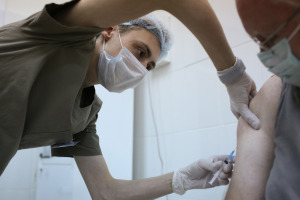
The state of Indiana is set to receive more than 55,000 doses of the COVID-19 vaccine for health care workers next week, with the initial doses going to five pilot hospitals. By the end of next week, additional doses are expected at a total of 50 hospitals throughout the state.
Hospitals are discharging patients several days earlier than they otherwise would, sending them home sometimes with oxygen machines, intravenous lines and powerful medicines.
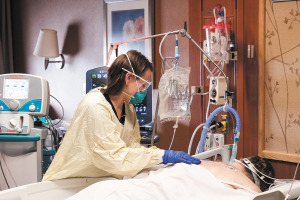
Indiana Gov. Eric Holcomb on Wednesday said he was directing hospitals across the state “to postpone or reschedule non-emergent procedures done in the in-patient hospital setting” from Dec. 16 to Jan. 3 to ensure they are not overwhelmed by the COVID-19 pandemic.
U.S. hospitals slammed with COVID-19 patients are trying to lure nurses and doctors out of retirement, recruiting students and new graduates who have yet to earn their licenses and offering eye-popping salaries in a desperate bid to ease staffing shortages.
Despite the change in fortunes, Ascension signaled that it is not yet out of the woods, noting that “consumer confidence and healthcare hesitation as a result of COVID-19 continue to affect Ascension markets, to varying degrees.”
Across Indiana, the number of COVID-19 hospitalizations has been shattering records day after day, putting a strain on many hospitals and adding to the anxiety about how much longer the pandemic will continue.
The number of new daily coronavirus cases in the United States is at an all-time high. Nearly every metric is trending in the wrong direction, prompting states to add new restrictions and hospitals to prepare for a potentially dark future.
The Indiana Hospital Association on Tuesday warned that medical facilities are struggling to keep up with a record number of hospitalizations. It called on Hoosiers to wear face coverings and practice social distancing.
Ventec, in a partnership with General Motors, began operations in the GM Components Holdings plant in April, hiring local employees to make 30,000 ventilators for hospitals in the fight against the COVID-19 pandemic.
Indiana, Missouri, Oklahoma, Iowa, Nebraska, North Dakota, and New Mexico all reported record high hospitalizations this week.
Thestates’ largest hospital system saw decreases in admissions, surgical cases, ER visits and inpatient days; overall, patient service revenue fell about 2.5% during the nine-month period.
The aggressive offensive by a Russian-speaking criminal gang coincides with the U.S. presidential election, though there was no immediate indication it was motivated by anything but profit.