House property tax plan would mean lower bills for most homeowners, big changes in system over time
To achieve immediate tax relief, the plan would create a credit worth up to $200 on all homeowners’ property tax bills beginning in 2026.
Legislative leaders have made clear that they intend to act on Gov. Mike Braun’s central campaign promise to provide property tax relief. However, with less than a month left to pass a solution, leaders have yet to announce agreement on an approach.
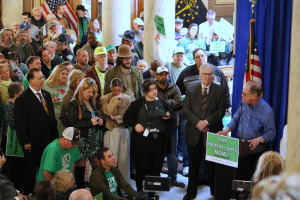
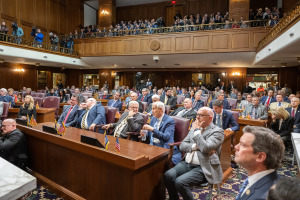
Many of those in the crowd, whose chants could heard throughout the Statehouse, wore green to symbolize the money they say is lost through property taxes.
Wednesday’s amendment to Senate Bill 1 marked the bill’s third major iteration this session, signaling that legislative leaders have not yet settled on the approach to lower property taxes.
Indiana lawmakers have been feeling the heat to restore more significant cuts to the Legislature’s primary property-tax relief bill.
School officials and advocates, in particular, denounced the dual legislation considered Wednesday because of the possible the double-whammy hit to budgets.
As Indiana’s Legislature continues to debate statewide property tax reform, new data show that homeowners have taken on an unfair share of property taxes.
Indiana lawmakers are advancing a bill to force the district to share property tax revenue with charter schools. While charter advocates support the change, IPS worries about creating an unsustainable system.
Indiana Gov. Mike Braun said Tuesday that he will continue to fight for broader property-tax relief after a Senate fiscal committee scaled back his plan for ambitious tax cuts.
Senate Bill 1, which previously carried Gov. Mike Braun’s ambitious property tax relief plan, was pared down significantly in committee following outcry from local government leaders.
The bill would reduce property taxes—and therefore reduce local government revenue—by about $1.4 billion over three years, according to the bill’s fiscal plan.
The Senate-approved tax bill would limit total growth in property tax revenue, which could reduce individual bills. But the Republican governor said the legislation lacks “meaningful tax cuts.”
The 93-page amendment to Senate Bill 1 introduced Tuesday scrapped an expanded homestead deduction and tax bill caps, which offered the bulk of the plan’s homeowner relief but threatened local government funding.
Despite tax relief being a top priority for Gov. Mike Braun, Republican leaders in the General Assembly seem to be taking a more cautious approach.
Indiana lawmakers advanced road-funding legislation Monday morning without a provision that would have allowed Indianapolis to pose a referendum to its residents to pay for road improvements.
While many chairs are winding down hearings on the bills assigned to their committees, one of the most anticipated pieces of legislation for the 2025 session had its first committee hearing this week.
As Indiana politicians debate the best way for the state to relieve a growing property tax problem, their neighbors just to the south have made a decisive move about taxation.
House Republicans also introduced a slew of bills addressing trademark issues such as education, housing and health care.
Policymakers have proposed at least 12 bills seeking to create or adjust property tax credits or deductions and institute freezes.
Senate Tax and Fiscal Policy Chair Travis Holdman, R-Markle, said his caucus is ready to introduce between 12 and 15 bills that will affect property taxes.