Purdue Research Foundation acquires lab building for $12.5M

The two-story building, which will be known as the Northwest Indianapolis Research Building, features biotechnology-focused research laboratories.
Read More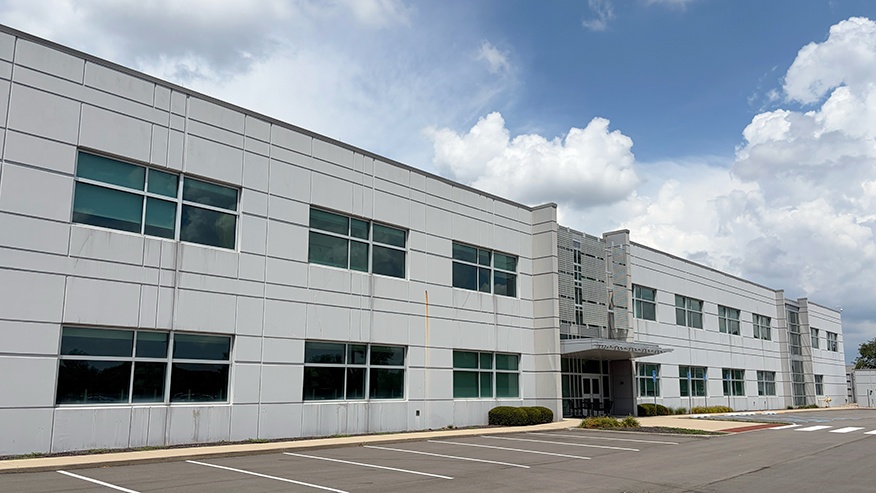
The two-story building, which will be known as the Northwest Indianapolis Research Building, features biotechnology-focused research laboratories.
Read More
The findings were drawn from 55 of the country’s 69 top public and private research universities by the Association of American Universities Data Exchange.
Read More
The grant from the National Institutes of Health will allow researchers from the IU School of Medicine and the IU Luddy School of Informatics, Computing and Engineering to accelerate the search for new Alzheimer’s treatments.
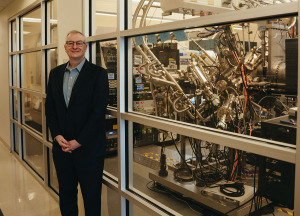
Michael Manfra says quantum technology looks like the future — and it’s his job to make sure Indiana is well-positioned for what he expects is inevitable.

Youhuang Xiang, 32, will receive prison time and be deported as part of his sentence.
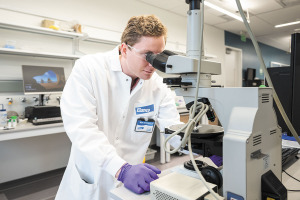
Indiana’s largest life sciences companies and research universities are working to make the state an international leader in chemistry innovation — and they’re ready to launch the first step in a plan called Catalyze Indiana.

New research from the Indy Chamber and IU Indianapolis shows Indianapolis is a top site for women in sports leadership roles.
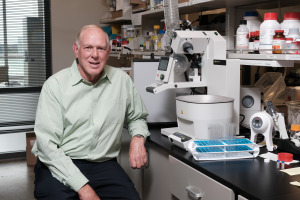
Low founded seven companies based on intellectual property developed at Purdue, including Endocyte Inc., which he sold to Novartis Inc. in 2018 for $2.1 billion.
IU Inc. was approved unanimously by the university’s board of trustees during its monthly meeting Friday in Indianapolis.

The study’s goal is to also explore how these tools can be re-envisioned to promote long-term well-being and character virtues.

Researchers say the new treatment holds the potential to treat some dogs diagnosed with cancer without turning to more expensive traditional procedures such as radiation, chemotherapy or surgery.

The expedition team, which includes researchers from Purdue University, was set to launch from Majuro in the Marshall Islands on Nov. 4, sailing about 1,200 nautical miles to Nikumaroro.
The goal of the National Science Foundation’s Engines program is to grow regional innovation ecosystems.

More than half of the canceled project dollars from the National Institutes of Health, or $14.3 million, were dedicated to projects at Indiana University in Indianapolis.

The Female Sports Performance and Research Initiative, in partnership with Pacers Sports & Entertainment and the Indiana Sports Corp, aims to generate data to support evidence-based guidelines using women-centered research.
The government had tied the funding freezes to antisemitism, but the judge said the university’s federally backed research had little connection to discrimination against Jews.
The IU Launch Accelerator for Biosciences, or IU LAB, based in Indianapolis, will serve as the coordinating organization for projects launched as part of the initiative.

The Indianapolis metro area ranks 47th among the nation’s 195 large metros when it comes to artificial intelligence business activity, according to a new study from the Brookings Institution.

Hundreds of university researchers had their National Science Foundation funding abruptly canceled Friday to comply with President Trump’s directives.

Amid uncertainty around federal research funding, universities must explore private support, Purdue University President Mung Chiang told an tech industry group on Tuesday.
At the heart of the debate over support for scientific research is a not-widely-known element of the federal grant process known as the “facilities and administrative,” or indirect costs.
Indiana University Indianapolis received Research 1, or R1, status from the Carnegie Classification of Institutions of Higher Education. It’s now the second IU campus to hold the designation.