Twenty years after nearly being shuttered, U.S. Naval Surface Warfare Center, Crane Division, has become a key player in the federal government’s strategy to outpace its foreign rivals in the booming microelectronics industry.
Consideration of a pipeline to pump massive amounts of water from Lafayette to the LEAP Innovation and Research District in Lebanon is revealing major gaps in Indiana’s water-rights laws, some stakeholders say.
The true vibrancy of a regional economy is determined by high-value exports to other regions, often based on scalable ideas. Today, that means software, energy, advanced materials, financial products, pharmaceuticals, complex manufactured goods, digital content and technical services.
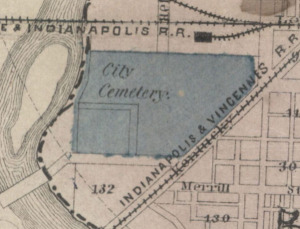
The city’s findings dash the hopes of a historical preservation group that the old law would require a full excavation of the city’s first public cemetery site before work could begin on a bridge over the White River and a proposed Indy Eleven soccer stadium.
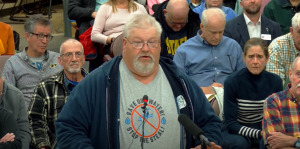
The move comes as the Indiana Economic Development Corp. faces pushback for its exploration of a plan to pump massive sums of water from Wabash River aquifers for a high-tech manufacturing district in Boone County.
The move comes as the state explores the feasibility of pumping as much as 100 million gallons of water from Wabash River aquifers for a high-tech manufacturing park in Boone County.
The move comes as the Indiana Economic Development Corp. faces questions about its plan to tap the Wabash River aquifer and withdraw as much as 100 million gallons per day for an advanced manufacturing district in central Indiana.
Kinsey Institute supporters say the proposal to move much of the administration of the institute into a not-for-profit is rushed, unnecessary and underdeveloped. Indiana University trustees have delayed a decision on the plan to gather more input.
The research is the first to document that an obesity medication can not only pare pounds, but also safely prevent a heart attack, stroke or a heart-related death in people who already have heart disease—but not diabetes.
To take full advantage of the new economic opportunities coming Indiana’s away, addressing education and workforce development deficiencies will be paramount.
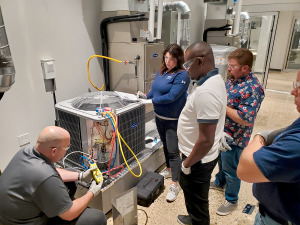
Several new and growing training programs in central Indiana are designed to bring the next desperately needed generation of HVAC technicians up to speed.
Karen Bravo became dean of the Indiana University Robert H. McKinney School of Law in July 2020. She joined its faculty 16 years earlier, in 2004, teaching international law, international trade law and business courses. An international law scholar and expert in the study of human trafficking, her research interests include labor liberalization, personhood, slavery […]
The foundation spent itself down to zero this year, distributing legacy grants to arts organizations, the University of Indianapolis and not-for-profits focused on military families, former prison inmates, HIV prevention and animal conservation.