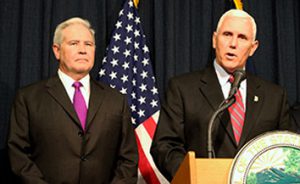
On the eve of the 2016 legislative session, the governor released a list of bills that doesn’t include proposals to expand civil rights protections to people who are gay or transgender.
A lack of consensus among Republicans on several issues—including questions about gay rights, transportation funding and ISTEP testing—looms large as lawmakers ready for the 2016 legislative session, which kicks off Tuesday.
Officials in four Indiana areas that failed to win a share of the tens of millions of dollars in the Regional Cities competition are looking to other sources fund their dream projects.
Officials say the first phase of a rapid transit line that should eventually connect Westfield to Greenwood won’t be delayed even though the Indianapolis region missed out on a share of $84 million in state funding from the Regional Cities Initiative.
The Indiana Economic Development Corp. on Tuesday voted to approve Regional Cities grants of $42 million each to north central, northeast and southwest Indiana, one more region than originally planned.
Indiana's tax-amnesty program has collected enough money to pay for the new Regional Cities grant program spearheaded by Gov. Mike Pence, state officials announced Wednesday.
There’s no “manifest destiny” for Indianapolis. We aren’t sharing in the national migration of talent to metropolitan America. We lag most other large regions in population growth, including peers like Nashville, Denver and Columbus.
City officials are working with an entrepreneur to turn the 950,000-square-foot building and a pair of adjacent two-story buildings into a place for high-technology businesses, manufacturing, offices, condominiums, stores and restaurants.
The tax amnesty is being counted on to provide $84 million for the state’s new Regional Cities program and $6 million to support Amtrak’s Hoosier State line between Indianapolis and Chicago.
Indiana's second tax amnesty period in the past decade is under way, giving delinquent taxpayers a chance to pay their tax bills free of penalties, interest and collection fees.
The Regional Cities legislation was a lousy idea designed to divert Hoosiers from the notion that their state government should support all regions of our state. Instead, we are pitting one region against another, fighting for scraps from the state’s table.
Local officials submitted plans to create vibrant “regional cities” and increase their populations—but only two groups will get matching funds to put their proposals into action.
The decision by Indianapolis officials to join Carmel, Westfield and Greenwood in an economic development group seeking millions of dollars in state grants has some questioning whether it needs the help as much as other regions.
Democrat Jim Schellinger’s appointment to head the state’s job-creating agency creates a bipartisan opportunity for a renewed and necessary push for higher quality jobs, not just a higher quantity of jobs.