Elevance commits $1M to Indy homelessness effort
Streets to Home Indy, a public-private partnership, said Elevance Health’s donation will help sustain housing efforts through rental assistance, case management and implementation support.
Read More
Streets to Home Indy, a public-private partnership, said Elevance Health’s donation will help sustain housing efforts through rental assistance, case management and implementation support.
Read More
The same day that advocates touted the progress of their work so far, Gov. Mike Braun signed a public camping ban into law.
Read More
Additionally, some who had left the Leonard Street camp after initial closure notices and had relocated elsewhere in the neighborhood are also being connected to housing and services.
Streets to Home leaders said a recent 10-person pilot was successful and that stakeholders were able to “accelerate our timeline” to launch the program and get people from the Leonard Street camp housed.
Critics say closing the camp won’t be helpful to the Streets to Home program—an ambitious new cross-agency effort to house more than 300 people living on the city’s streets.
The 2025 point-in-time count was the second-highest recorded in Indianapolis over the past 10 years, trailing only the 2021 high of 1,928.

Advocates hope the first phase of the initiative, called Streets to Home, will provide housing and wraparound services to some 300 residents by next year.

Language similar to House Bill 1662, which died earlier this legislative session, was amended into a seemingly unrelated bill, raising concerns from Democrats and advocates for the homeless.

The annual count is required for communities to receive funding from the U.S. Department of Housing and Urban Development, which helps fund local homelessness prevention efforts.
While the homeless population across the city has decreased from its pandemic high of nearly 2,000 people, it has yet to return to the lower levels recorded before the pandemic hit.

Indianapolis plans to pilot a low-barrier shelter on city-owned property and create a master leasing program in which the city would lease units on behalf of property owners to low- or no-income individuals.
The funds will allow Family Promise of Greater Indianapolis to expand its apartment shelter program and support The Learning Tree’s tenant advocacy program.
The city of Indianapolis, Indiana University Center for Research on Inclusion and Social Policy, and the Coalition for Homelessness Intervention and Prevention, or CHIP, partner annually to measure the data.
Indianapolis will get the funding from the U.S. Department of Housing and Urban Development for its “housing first” homelessness efforts, officials announced Wednesday. The strategy prioritizes stable housing, followed by supportive services.

The death count is 91% higher than in last year’s Zoom-only ceremony, which recognized the deaths of 87 people.
Lutheran Child and Family Services spearheaded the project, which is part of a “housing first” approach that prioritizes a place to live as the first step to stability.
The usual plan, which involves packing people closely on as many cots and mats as Wheeler Mission’s shelters can hold, isn’t an option under social distancing guidelines.
The Coalition for Homelessness Intervention and Prevention of Indianapolis has been chosen to receive a $1.25 million grant from a fund launched by Amazon founder and CEO Jeff Bezos.
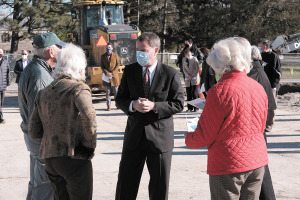
Community officials are hopeful a new east-side housing project focused on young adults aging out of foster care will go a long way in furthering the area’s efforts to reduce homelessness.
The funding will serve 350 people or families currently living in non-congregate shelters, especially those at risk of contracting COVID-19 and dying, and 150 unsheltered households that face high barriers to find housing.
The count was taken in January, so it doesn’t consider the number of people newly experiencing homelessness because of the pandemic.
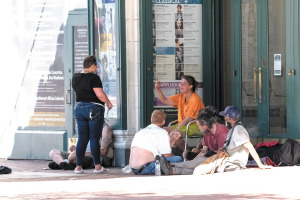
For weeks, camps of people experiencing homelessness and those suffering from substance use disorders have settled in on Monument Circle and near City Market.