Goodwill of Central & Southern Indiana to lead Puerto Rico expansion
By 2024, Goodwill aims to establish three stores in Puerto Rico and have 40 to 80 employees working on the Caribbean island.
Read MoreBy 2024, Goodwill aims to establish three stores in Puerto Rico and have 40 to 80 employees working on the Caribbean island.
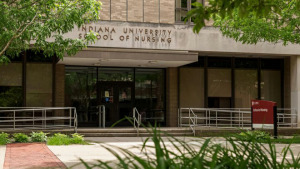
Read MoreIndiana University said the renovations at the IU School of Nursing at IUPUI will help increase teaching and simulation capacity in support of planned enrollment growth to help address a shortage of nurses both in Indiana and nationwide.
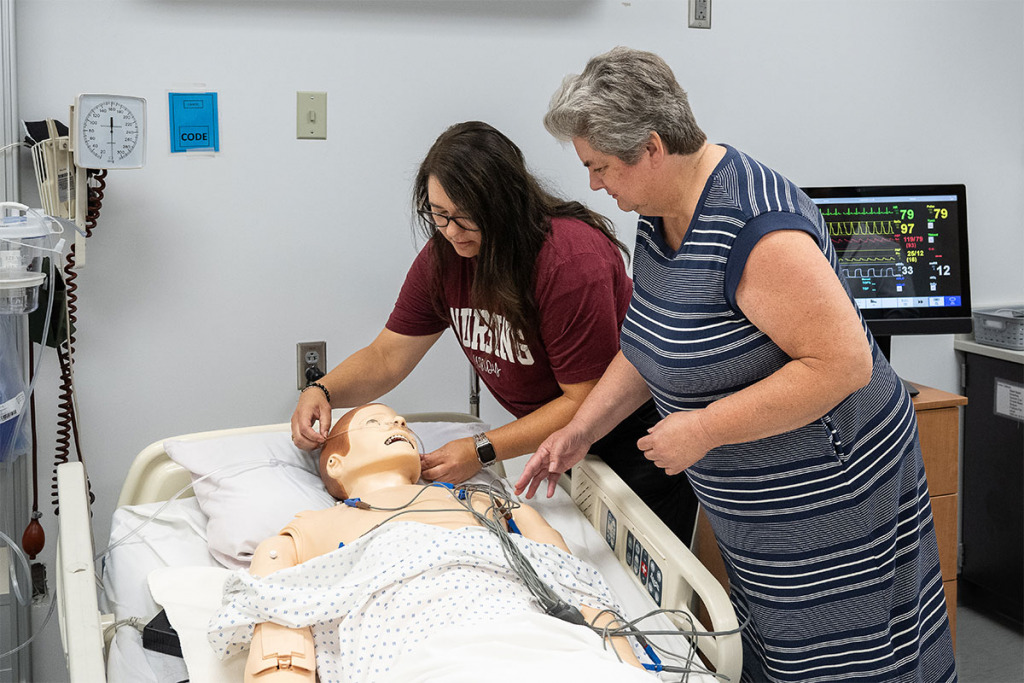
Read MoreThe University of Indianapolis is launching a program this month to prepare nurse practitioners, long a fixture in primary care exam rooms, to care for complex and critically ill patients in hospitals.
The Franciscan Healthy Living Center, which opened in 2020, is designed to help those who’ve been through cancer, heart disease, surgery or other serious conditions improve their health factors, including diet, fitness, sleep and mental health.
Occupational therapists, physical therapists and registered nurses have received payments from the settlement, while almost a third will go toward attorney fees.
Hospitals say AI is helping nurses work more efficiently while addressing burnout and understaffing. But nursing unions argue the technology is overriding nurses’ expertise and degrading the quality of care patients receive.
The COVID-19 pandemic exacerbated the nursing shortage as many nurses chose to quit their jobs due to a high workload and burnout.
The Indiana Board of Nursing has accredited the university to accept 48 students a year, meaning the program will have nearly 200 students when it is fully enrolled across four years.
The Indiana Attorney General’s Office filed administrative complaints this month with the state nursing board against the nurses in connection with the incidents.
Estimates predict that Indiana would need an additional 5,000 nurses by 2031, equal to graduating an additional 1,300 nurses each year until that time, according to the Indiana Hospital Association.
The Indianapolis-based nurses cite poor staffing ratios, patient care and wages as some of the driving reasons behind their efforts.
In 1994, five states allowed nurse practitioners full practice authority—meaning they didn’t need physician supervision to test, treat and prescribe. Today, 27 states and Washington, D.C., do.
The premature end of the IU Health partnership could leave a large number of IPS schools without a registered nurse or licensed practical nurse to dispense medication or respond to health emergencies.
Net patient revenue for the first nine months of the year increased an undisclosed amount, driven by an increase in volumes in many areas. Patient days climbed 5% and admissions rose 5.7% during the period.
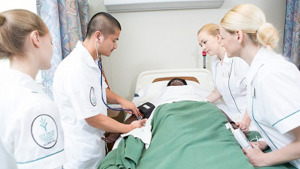
The Hamilton County campus will admit 20 nursing students for the spring semester and 20 more students for the fall semester. Enrollment increases are expected in future years.
The state Senate voted 48-0 on Thursday in favor of allowing nursing schools to increase enrollment and hire more part-time instructors if they have a high percentage of graduates passing the national nursing licensing exam.
The bill, which allows nursing schools to increase enrollment and hire more part-time instructors, is widely supported by Indiana hospital systems, nursing schools and the long-term-care industry.
Indiana University Health, the state’s largest hospital system, recently hired 700 traveling nurses to work in its 16 hospitals under 13-week contracts.
The state ranks far lower—33rd—for “work environment,” according to the study, conducted by Wallet Hub, a financial consumer website.
Foster, 58, is a registered nurse and program manager of the special pathogens unit at Indiana University Health, which is dealing with many facets of the pandemic, from vaccinations to keeping bedside workers safe.
The problem, health leaders say, is twofold: Nurses are quitting or retiring, exhausted or demoralized by the crisis. And many are leaving for lucrative temporary jobs with traveling-nurse agencies that can pay $5,000 or more a week.
Researchers say that trust could become important in the push to increase COVID-19 vaccinations, as long as unvaccinated people have care providers they know and are open to hearing new information about the vaccines.