
Republicans select former Marion County GOP chair to replace Merritt at Statehouse
Former state Sen. Jim Merritt, who had been in office since 1990, resigned from the position earlier this month. He still had two years left in his term.
Former state Sen. Jim Merritt, who had been in office since 1990, resigned from the position earlier this month. He still had two years left in his term.
Cities and states are trying to avoid full-blown lockdowns by enacting almost every other kind of restriction: nighttime curfews, bar closures, stricter mask mandates, and 10-person gathering limits, for example.
The latest executive order, which Gov. Eric Holcomb signed Friday, requires all businesses to place “clearly visible signage at their public and employee entrances notifying that face coverings are required for all individuals entering the business.”
Members of the Indiana General Assembly will not be required to wear masks while at the Statehouse next week for the ceremonial start to the legislative session and possibly not for the upcoming four-month session scheduled to start in January.

Gov. Eric Holcomb also indicated that the five-stage system charting the state’s recovery would be retired. The state has been in the final stage—Stage 5—since September, which marked the beginning of a second wave of infections, hospitalizations and deaths.
Sports betting analysts say interest in football, particularly the Indianapolis Colts, Indiana University and Notre Dame, is fueling wagers.
John Zody, who has been the party chair since 2013, told reporters on Friday morning that he will finish his term through March and then help the party reorganize its leadership.

Indiana Republicans will be returning to the Statehouse with an even tighter grip on the Legislature after again turning aside Democrats who had tried to break the GOP’s supermajority control.
Other than tracking schools and long-term-care facilities, the state doesn’t post any identifying data on a website or dashboard where people can identify COVID hot spots and track their spread.
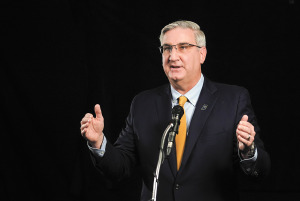
The Republican has said repeatedly that he’d be willing to take a step back in the phased-in reopening if key data indicated the pandemic was worsening. But he has never made good on that threat.
In addition to 26 new deaths, the Indiana State Department of Health on Friday reported that the seven-day moving average for cases had reached an all-time high of 2,608.
Democratic candidate Woody Myers will debut his campaign’s first TV ad on Friday after struggling to raise funds throughout the election season.
Local officials say state and federal authorities in recent weeks have showed little interest in helping them push for the tougher measures needed to control the pandemic.
State health officials are expressing frustration about a lack of federal financial support as they face orders to prepare to receive and distribute the first doses of a coronavirus vaccine by Nov. 15, even though one is not likely to be approved until later this year.
Iowa-based Vote Smart issued a statement Wednesday that said Indiana House Speaker Todd Huston is airing an ad that attacks his opponent, Democrat Aimee Rivera Cole, “with information he knows to be false.”
Fifty-three of Indiana’s 92 counties were placed in orange or red levels on Wednesday under the state’s color-coded weekly tracking map update, as new infections and hospitalizations increased sharply.
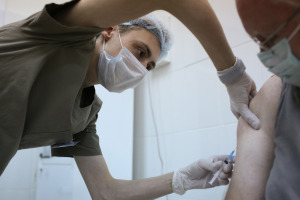
The situation remains murky, as several drugmakers and research institutions are scrambling to develop a vaccine, but none have yet won approval from the Food and Drug Administration to distribute the drug.
The Indiana State Department of Health on Wednesday reported that the seven-day moving average for cases has reached an all-time high of 2,397.
The 30-unit apartment project is aimed at individuals aged 18 to 24 who were previously in the state’s child welfare and fostering system.
Roughly half of the respondents in the two polls favored Republican incumbent Eric Holcomb in the Indiana governor’s race, followed by Democrat Woody Myers and Libertarian Donald Rainwater.