
COVID-19 kills 51 more Hoosiers as cases top 2,000 for fifth straight day
The Indiana State Department of Health on Tuesday reported that the seven-day moving average for cases has reached an all-time high of 2,282.
The Indiana State Department of Health on Tuesday reported that the seven-day moving average for cases has reached an all-time high of 2,282.
The state on Monday reported 13 more deaths due to COVID-19. The seven-day moving average for cases has reached an all-time high of 2,215.

Teresa Lubbers, IBJ’s 2020 Michael A. Carroll Award winner, has led the Indiana Commission for Higher Education since 2009.
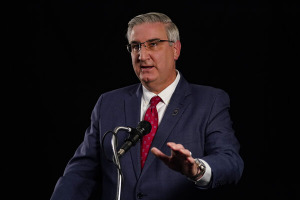
The three candidates answered questions Tuesday night about education, economic development and the role of government, but spent little time discussing the ongoing COVID-19 pandemic.
Indiana Office of Management and Budget Director Cris Johnston said, as of Oct. 15, the administration had either already spent or committed to spending about $1.7 billion of the $2.4 billion the state received from the federal Coronavirus Relief Fund
The pace of Indiana’s steadily improving unemployment rate slowed considerably in September. Meanwhile, the state’s labor force participation rate and private employment numbers dropped.
Republican state lawmakers seeking reelection in the northern suburbs are campaigning significantly more this year than in previous elections.
Indiana Democrats are targeting the state attorney general’s race as their best chance to break the stranglehold Republicans have over state government.
A spokeswoman for Gov. Eric Holcomb said the pandemic substantially altered plans, but the commission is still working on a final report to be released before the end of 2020.
Indiana Gov. Holcomb moved Indiana to Stage 5, which essentially lifted all restrictions, on Sept. 26, but COVID-19 cases and hospitalizations are back on the increase.

IBJ looked at 30 of the more measurable commitments the governor has made over the last four years to see whether he’s lived up to what he promised and what Hoosiers can expect if he wins a second term.
State Superintendent of Public Instruction Jennifer McCormick, a frequent critic of her fellow Republicans, took several swipes at Gov. Eric Holcomb in an online event Monday night for Dr. Woody Myers.
The state’s attorney disciplinary commission has asked the Indiana Supreme Court to order that Attorney General Curtis Hill pay about $57,000 toward expenses in the case.
The state received $2.4 billion in CARES Act funding, and still has about $1 billion remaining as Gov. Eric Holcomb’s administration has been hopeful that Congress would amend the restrictions regarding how and when the dollars can be spent.
Woody Myers and running mate Linda Lawson, a former state representative, are emphasizing education as a key component of their ticket, playing to those who may be disgruntled with Indiana’s education reform movement.
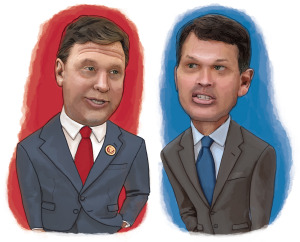
Political veterans face off in bid to replace Republican Curtis Hill.
The former congressman and secretary of state entered the race in May just before the filing deadline because he believed the GOP incumbent, Curtis Hill, was no longer suitable for the office.
When the former Evansville mayor announced his candidacy in December, he believed he’d be facing embattled Republican incumbent Curtis Hill. Instead, is running against Republican Todd Rokita.
Indiana Gov. Eric Holcomb said it would take years to clean up the 725-acre site, making it not financially viable.
Indiana Department of Workforce Development chief of staff Josh Richardson said the state’s unemployment insurance trust fund is expected to run dry by the end of September.