

Fed rules make tiny hospitals profitable
St. Vincent Health announced last month it would build eight micro-hospitals—or “emergency hospitals,” as the organization calls them. Other area hospitals are watching the experiment.
St. Vincent Health announced last month it would build eight micro-hospitals—or “emergency hospitals,” as the organization calls them. Other area hospitals are watching the experiment.
Supplies are the second-largest expense for hospitals. Here’s how Indiana’s largest health system plans to keep its 15 hospitals stocked in bandages and medical supplies.
The health system has opened five urgent care facilities in the area since the beginning of last year.

New President Matthew Cook’s job is to build out a system that will help get physician referrals across the state to help fill Riley’s 385 beds.
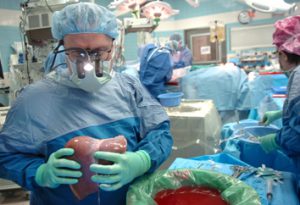
Dr. Joseph Tector, who built IU Health’s transplant program into one of the nation’s largest before announcing his departure Friday, is seeking back wages and penalties worth $4.7 million from the hospital system.

Indiana University Health hopes its $1 billion plan to expand Methodist Hospital will spawn nearby development, creating an area where employees can live adjacent to where they work.
The program uses an individual’s genetic code to create a personalized therapy that attacks cancer while minimizing harm to the patient.
Legacy of Hope is an educational program that has trained more than 3,000 IU Health employees to identify cases of domestic violence and help victims survive and thrive.
The IU Child Protection Program at Riley Hospital for Children has a team of five physicians, three social workers, two nurses and a nurse practitioner who consult on about 6,000 suspected cases of child abuse a year statewide.
When CEO Dan Evans relinquishes the reins of Indiana University Health in April, he will hand his successor Dennis Murphy a hospital system with a pristine balance sheet. That’s a big change for IU Health, which when the Great Recession hit was debt-laden and cash-strapped.
Despite national attention paid to RFRA and Jared Fogle, most of IBJ’s top-read online stories this year were the result of deeply sourced reporting on people, issues and businesses specific to central Indiana.

IU Health effectively started its own ambulance service in December by adding two ambulances to its long-standing LifeLine critical-care service and opening a call center to help other health care providers figure out what level of transport services a particular patient needs.
The revamp is designed to help Indianapolis-based system save money in coming decades and to have facilities better suited to changes in health care that have sped up shifts in care from inpatient hospital facilities to outpatient facilities.
The state’s largest hospital system will promote IU Health Arnett President Al Gatmaitin president to chief operating officer, replacing Dennis Murphy, who is set to become CEO in April.
Ryan Kitchell joined IU Health in 2012 following a blitz of mergers and building projects by the state’s largest hospital system. He helped create internal systems that better organized care and strengthened the bottom line.

Murphy will become CEO of IU Health in April. Those who know him say Murphy’s early experiences with family, church and medicine make him exceptionally well-suited to a complex hospital system in swiftly changing times.
The City-County Council voted unanimously Monday night to approve $75 million in bonds for infrastructure improvements that should allow development of the 16 Tech innovation district to move forward.
Hospitals have long argued that they pass on the cost of the uninsured to private insurance customers. But a new study shows that’s less than half-true.
The Indianapolis-based hospital system said its efforts to reduce patients’ need for expensive health care services, known as population health, slashed the use of hospitals, nursing homes and expensive imaging scans among the 140,000 Hoosiers IU Health now serves.

Five months after it expected to hold an election, the union trying to organize nurses at Indiana University Health’s downtown hospitals doesn’t even have a projected date for a vote.