

Democrats’ historic council grip likely to last, political observers say
Republicans will be forced to work with Democrats to see any GOP proposals take flight. And new, young Republican councilors say they’re eager to work across the aisle.
Republicans will be forced to work with Democrats to see any GOP proposals take flight. And new, young Republican councilors say they’re eager to work across the aisle.
The proposal aims to relax several long-standing regulations that put taxi companies at an unfair advantage compared with ride-sharing companies Uber and Lift, which don’t have to comply with the same standards.
Members of the Indianapolis City-County Council’s Rules and Public Policy Committee voted along party lines Tuesday to approve a 110% pay increase for council members.

Indianapolis City-County Council Democrats have introduced a proposal that would more than double the base pay of councilors in 2020—a proposal Mayor Joe Hogsett said he would veto if passed.
Elected to a second term on Tuesday, Democratic Mayor Joe Hogsett said he’ll continue to look for common ground between parties on the City-County Council, although Democrats will outnumber Republicans about 4-to-1.
Democrats picked up at least five seats—and possibly six, depending on the outcome of a race with a razor-thin margin. Republican leader Mike McQuillen was among the GOP casualties.

The 2020 spending plan—which passed 22-2—is projected to spend about $171,500 less than the city will receive in revenue. Officials say that makes it the city’s third consecutive balanced budget since Hogsett—who is seeking re-election—took office in 2016.

The Indianapolis City-County Council on Monday night approved nearly $10 million in financial incentives for a Denver-based developer that is planning a 13-story apartment, retail and office project across the street from the Indiana War Memorial.

The council’s Metropolitan and Economic Development Committee voted 6-5 to send two proposals concerning Charles Street Investment Partners’ mixed-use project at 421 N. Pennsylvania St. to the full City-County Council.
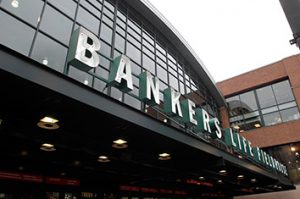
The move pushes forward the Capital Improvement Board’s deal with the Pacers, which calls for more than $360 million in renovations to Bankers Life Fieldhouse.
The Indianapolis City-County Council on Monday voted 20-4 to approve Mayor Joe Hogsett’s plan to “test strategies” to combat food insecurity in Indianapolis.
Republican mayoral candidate state Sen. Jim Merritt on Thursday criticized Mayor Joe Hogsett’s plan to spend about $580,000 on programs to combat food insecurity in Indianapolis and said it “will likely make the problem worse.”
State Sen. Jim Merritt, a Republican running against Mayor Joe Hogsett in this year’s mayoral election, accused Hogsett of “purposely inflating” the number of blighted properties his administration had “improved” in Indianapolis.
City officials said the area is primed for redevelopment, especially after being designated a Lift Indy neighborhood, which means the city will direct about $4 million in investments to the area over three years.
The Indianapolis City-County Council’s public works committee on Thursday unanimously approved a plan to spend about $8 million in returned local option income tax dollars.
Indianapolis Mayor Joe Hogsett’s new initiatives to combat food insecurity were advanced by a vote at an Indianapolis City-County Council committee Wednesday. The overall plan involves spending $580,000 on four programs.
Stephen Clay was persona on grata on the council after being expelled from the Democratic caucus for a leadership coup in 2018.
The Indianapolis City-County Council on Monday overwhelmingly approved proposals to help fund the Capital Improvement Board’s long-term strategic plan, including chipping in $270 million to help fund a massive overhaul of Bankers Life Fieldhouse.
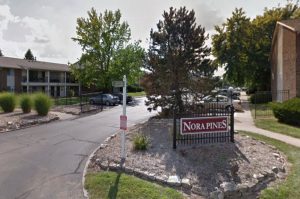
The 254-unit Nora Pines would be renamed but remain affordable housing. TWG Development is asking the city to issue $17.6 million in bonds for the project, which the developer would be responsible for repaying.
Indianapolis Mayor Joe Hogsett outlined plans to tackle food insecurity in his state of the city address, stating that he would soon submit to the Indianapolis City-County Council a “significant investment for programming.”