
How much money will flow to college athletes? It’s anybody’s guess
Just how much of a market there might be for so-called “name, image and likeness” compensation is unknown, but the next few months will say a lot.
Just how much of a market there might be for so-called “name, image and likeness” compensation is unknown, but the next few months will say a lot.
Dozens of Indianapolis community organizations based in districts experiencing high levels of violent crime will receive grants aimed at addressing root causes of crime and violence.
Duane Nickell, a retired science teacher in Indianapolis, decided it was time to collect the stories of 17 prominent Hoosier scientists. What resulted is a book called “Scientific Indiana” that’s hitting stores now.
Hilary Buttrick comes to the Orr Fellowship, which connects high-caliber college grads with fast-growing companies, with a background in law and higher education. Most recently, Buttrick served as interim dean of Butler’s Lacy School of Business.
An academy infused with Latino culture and a school focused on closing learning gaps plan to open in Indianapolis in 2022, joining the city’s expansive roster of charter schools.
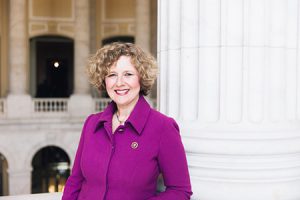
The former congresswoman will be returning to her alma mater, Indiana University Robert H. McKinney School of Law, as a distinguished scholar and ambassador at large, the school announced Wednesday.
Six states have laws set to go into effect July 1 that will permit college athletes to be paid for endorsements, personal appearances and social media posts, setting up the possibility of patchwork rules from coast to coast for thousands of athletes.
IPS officials this week are gathering feedback from parents at virtual and in-person town halls and through an online form before deciding how to spend almost $136 million from the latest round of federal aid for schools.

The U.S. Education Department said Wednesday it was erasing student debt for thousands of borrowers who attended the for-profit college chain, which closed in 2016. The chain’s parent, ITT Educational Services Inc., was based in Carmel.
The service, announced Tuesday by the Indiana Governor’s Workforce Cabinet and Ivy Tech, will provide up to four months of one-on-one career coaching via not-for-profit InsideTrack.
Marion County officials hope to ramp up vaccinations among 12- to 18-year-olds before the start of the school year to enable relaxed masking and social distancing restrictions.
School districts across the United States are hiring additional teachers in anticipation of what will be one of the largest kindergarten classes ever as enrollment rebounds following the coronavirus pandemic.
Former U.S. Sen. Evan Bayh will work with the O’Neill School of Public and Environmental Affairs, while Former Sen. Dan Coats will join the Hamilton Lugar School of Global and International Studies.
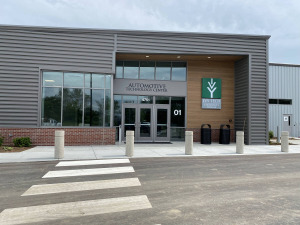
The center boasts 16 classrooms, nine labs, offices and state of the art facilities. It will give students hands-on and cognitive skills training needed to be an automotive technician.
The plane left the The Leadership In Flight Training, or LIFT, Academy in Indianapolis before 10 a.m. Sunday The academy was founded at by locally based Republic Airways in 2018 to train future commercial pilots and maintenance technicians.
Auditors found dozens of students counted in the district’s requests for enrollment-based funding who had never logged into the online learning platform.
The award program announced Thursday comes after the university stepped back this week from a plan to require shot documentation ahead of the fall semester amid protests from many state officials.
The Hamilton County Council voted Wednesday to seed the proposed Hamilton County Center for Career Achievement’s first three years of planning with $425,000.
The Indiana State Board of Education will consider Wednesday whether to accredit the schools, which would pave the way for them to participate in the state’s expanding voucher program.
IU announced Tuesday that students and employees would be able to attest to their vaccination without having to provide documentation of having received the shots, as was required under the previous policy announced May 21.