

CenterPoint Energy names first-ever president for Indiana service area
CenterPoint Energy, which merged with Evansville-based Vectren in 2019, serves more than 775,000 gas customers and more than 150,000 electric customers in Indiana.
CenterPoint Energy, which merged with Evansville-based Vectren in 2019, serves more than 775,000 gas customers and more than 150,000 electric customers in Indiana.

The Indiana Office of Utility Consumer Counselor, which acts on behalf of utility customers, did not join the settlement. Neither did ratepayer advocacy group Citizen’s Action Coalition.

The grant intended for renewable energy infrastructure work was committed to the airport more than two years ago by the Federal Aviation Administration, officials said Tuesday.

The project, spearheaded by the Indiana Department of Environmental Management and British contractor Eunomia, will replace a 20-year plan that has been in force for more than three decades.
BlackRock’s interest in AES represents a growing trend of private equity firms investing in, or buying outright, public utility companies as artificial intelligence fuels increasing electricity demands.
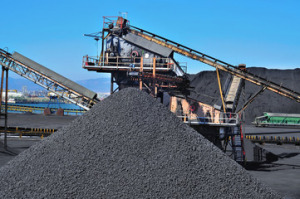
Coal once provided more than half of U.S. electricity production, but its share dropped to about 15% in 2024, down from about 45% as recently as 2010.

While demand is on the rise for carbon-free fission power as the U.S. races to meet a surge in electricity needs, costs remain high and construction is expected to be slow.
Though the overall growth was modest, clean-vehicle employment remains one of the stronger performing subsectors in Indiana.
Performance-incentive mechanisms and forecasted multiyear rate plans differ in their focus, with the former looks at output—such as capacity or reliability—while the latter looks at input—such as capital, labor or materials.

Gov. Mike Braun’s call for Indiana Utility Regulatory Commission applicants comes as Indiana ratepayers have seen a steep rise in electric bills and large power users like data centers flock to the Hoosier State.
The proposal appears to have bipartisan support. But it’s unclear how much the City-County Council, which has no actual authority over the utility, can truly influence the process.
We can’t discard this next-gen energy tech while it’s on the rise globally.

The state funding package will help pay for a slew of water infrastructure improvements, including a new water plant, new water wells and the replacement of all lead pipes.
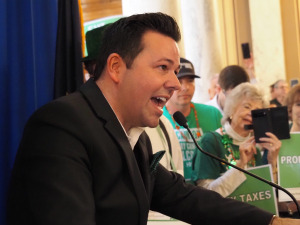
Indiana’s second-highest official has thrown his weight behind calls for a sales tax moratorium on utility services—but, even as rates rise, the idea faces a difficult path through the General Assembly.
With the explosive growth of Big Tech’s data centers threatening to overload U.S. electricity grids, policymakers are taking a hard look at a tough-love solution: bumping the energy-hungry centers off grids during power emergencies.

With the City-County Council approaching a Sept. 22 public hearing over the 467-acre project, IBJ looked into many of the questions being asked about the controversial development.

The rule was a key part of efforts under former President Joe Biden to refocus the Interior Department’s Bureau of Land Management, which oversees about 10% of land in the U.S.

Gov. Mike Braun also appointed a new commissioner of the Office of Utility Consumer Counselor, which serves as an advocate for Indiana utility customers.

Indiana Secretary of Energy and Natural Resources Suzanne Jaworowski told attendees at the annual Indiana Water Summit on Thursday that a pending statewide water plan must be “transparent, data-driven and developed collaboratively.”

The Indiana Court of Appeals overturned an Indiana Utility Regulatory Commission decision allowing Duke Energy to raise utility rates on Hoosiers, with the court ruling the utility couldn’t retroactively recover the money it lost due to a federally mandated cleanup of toxic coal ash.