
Distributions underway to repay local governments for gas tax suspension
The State Board of Finance met Tuesday morning to authorize the transfer of $121 million from the State Highway Fund to local governments.
Read More
The State Board of Finance met Tuesday morning to authorize the transfer of $121 million from the State Highway Fund to local governments.
Read More
The United States conducted a new round of airstrikes against Iran on Monday.
Read More
The government’s latest inflation report, to be released Tuesday, is forecast to show the first monthly drop in consumer prices in nearly four years.
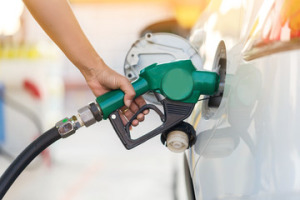
The governor paused collections of the 7% sales tax on gas starting in April — after war with Iran prompted high fuel prices — and waived the 36-cents-per-gallon gas excise tax beginning in May.
Oil prices rose to their highest point in weeks after President Donald Trump declared the U.S. ceasefire with Iran over.

The OPEC+ oil-producing alliance has now agreed to raise oil outputs for the fifth straight month.
According to state law, Thursday’s announcement marked the final time Braun is allowed to suspend the tax.
Hoosier drivers have been saving up to 62.5 cents per gallon in both sales and gas tax eliminations, which has reduced revenue for local governments.
Prices fell overnight after President Donald Trump signed an agreement with Iran that calls for Tehran to dilute its stockpile of highly enriched uranium and waives U.S.-backed sanctions on the country.
Indiana Gov. Mike Braun said there would likely be another suspension that goes until early August as well.

The United States and Iran appear to be closing in on a deal to end the war and open the Strait of Hormuz.
State law bars the governor from renewing or extending a proclamation more than once without General Assembly approval.
The gasoline tax is the single largest source of revenue for federal highway and public transit programs.

The company said it would offer extra compensation to U.S. and Canadian drivers as part of a temporary program to offset a sharp increase in gas prices due to the Iran war.
The move is expected to save Hoosier motorists 59.3 cents a gallon for the next month.
President Donald Trump said Tuesday he has paused the effort to guide stranded commercial vessels from the Strait of Hormuz in order to finalize a deal with Iran to end the war.
The Iran war, which is in its ninth week, still sees no clear path to an end.
Hoosiers can track fuel prices in real time using IN Fuel Watch, an online portal documenting gasoline prices at more than 4,600 stations across the state.
Indiana Gov. Mike Braun on April 8 signed an energy emergency declaration waiving the 7% sales tax on gas.
Indiana Gov. Mike Braun’s suspension continues until May 8, which is when he said he would consider whether to extend his executive order.
Excluding gas prices, retail sales were up 0.6%, helped in part by government tax refunds and warm weather.

The U.S. stock market has jumped more than 12% since hitting a bottom in late March on hopes the United States and Iran can avoid a worst-case scenario for the global economy despite their war.