
Indiana high schoolers set record graduation rate in 2025
It represents the third straight year of post-pandemic improvement kicked off in 2023, following a decade-low graduation rate in 2022.
Read More
It represents the third straight year of post-pandemic improvement kicked off in 2023, following a decade-low graduation rate in 2022.
Read More
The figures reflect concerns expressed by state leaders about Indiana’s declining college-going culture, especially as the state shifts focus toward career credentials and work-based learning.
Read More
The overhaul has been pitched by state officials as a way to boost Indiana’s dismal college-going numbers, but more critically, to also ensure that all Hoosier students—college-bound or not—graduate from high school with high-value, work-ready skills.

The announcement follows waves of criticism from Hoosier teachers, parents and students over earlier diploma proposals that would broadly exclude certain course requirements, like those in history, foreign language and fine arts.

The changes could have a large effect on publicized graduation rates, which are often used as a measure of success for school leaders and can be a key metric parents use to determine the quality of their child’s education.
Indiana Secretary of Education Katie Jenner said the data indicates that many students are continuing to recover from the academic impacts of COVID-related learning disruptions.
The State Board of Education on Wednesday approved three locally created graduation tracks at two school districts and one adult learning center.
The increase in graduation rates may not reflect how much students learned because the state relaxed requirements after schools were forced to finish the year remotely.
The state will review more than 100 schools under a new law that aims to stem the tide of students who leave without diplomas but are not counted as dropping out.
The pilot would have allowed seniors behind on credits to be counted as graduates in Indiana if they pass a high school equivalency exam and take steps toward career training.
The graduation rate at Emmerich Manual High School plummeted to 57% last year after a state audit found the school did not have the proper documentation for many of the students designated as leaving to be home-schooled.
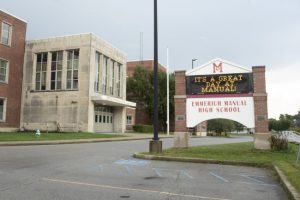
When students are recorded as leaving for home schools in Indiana, they’re left out of a school’s graduation calculations, as though they never attended at all.
Indiana graduation rates have held relatively steady since 2011, fluctuating by small amounts each year.
The Indianapolis not-for-profit helps prepare African-American youth in the fourth grade and higher for academic and career success.
Currently four different diplomas are offered. The bill would require the state board of education to create the “Indiana Diploma” as the state’s new baseline.
Indiana Virtual School has attracted thousands of students but graduated very few. A Chalkbeat Indiana investigation found the school’s founder hired his own company to manage the school, for which it received millions of dollars.
At the new event, more than 7,000 Marion County eighth-graders will get hands-on experience in eight job sectors, aided by some 3,000 volunteers from more than 100 companies.
Statewide, 88.9 percent of students graduated from high school, compared to 89.8 a year earlier. But graduation rates have only fluctuated by about one percentage point up or down since 2011.
The Education Department said Tuesday that the rate for the 2013-14 school year was 87.9 percent in Indiana.

Providence Cristo Rey is one of a handful of Indiana schools with overwhelming numbers of low-income students that is achieving results at least as good as or better than the state average.
Ninety-five percent of students concentrating on career and technical education courses, or CTE, graduate from high school. That compares with a 90-percent graduation rate for all graduates.
Seniors are earning their diploma while receiving a associate’s degree.