
Thanksgiving meal in Hoosier state expected to cost a bit less than last year, per report
The market survey is conducted each year by volunteer shoppers across Indiana who search for the best prices while not using coupons or special promotions.

The market survey is conducted each year by volunteer shoppers across Indiana who search for the best prices while not using coupons or special promotions.
The Federal Trade Commission argues the deal would eliminate competition and lead to higher food prices for already struggling customers.
The Federal Trade Commission contends the $24.6 billion deal would eliminate competition and lead to higher food prices for already struggling customers.
The plant has been linked to the deaths of at least nine people and hospitalizations of about 50 others in 18 states, including Indiana.

The two companies proposed what would be the largest supermarket merger in U.S. history in October 2022. But the Federal Trade Commission sued to prevent the $24.6 billion deal, alleging it would eliminate competition and raise grocery prices.
Legal experts characterize the move as an extraordinary attempt to interrupt the FTC’s enforcement powers, as it relies on a recent Supreme Court decision that limited a separate federal agency’s use of in-house legal proceedings.

Multiple retailers, restaurants and other businesses recently opened, closed or began planning new locations in the north suburbs of Indianapolis.
The recalls are tied to an ongoing outbreak of listeria poisoning that has killed two people and sickened nearly three dozen in 13 states, according to the U.S. Centers for Disease Control and Prevention.
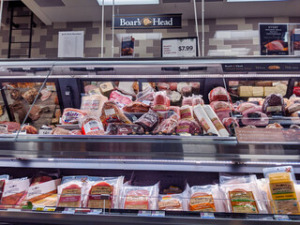
In central Indiana, Boar’s Head products are sold at Kroger, Needler’s Fresh Market and Fresh Thyme.

Market District, operated by Giant Eagle, will offer a grab-and-go prepared food section, bakery, deli counter with meats, cheeses and charcuterie, and event catering.
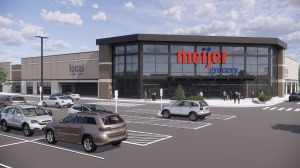
Plans submitted to the city call for a medium-format Meijer Grocery and a gas station to be constructed on the north side of the roundabout at Cyntheanne Road and Southeastern Parkway.

The farm-to-market-style grocery plans to open its first Indiana store next week.
It’s unclear if the new plan will satisfy regulators. In February, the U.S. Federal Trade Commission sued to block the $24.6 billion merger between the grocery giants.

The report, which collected information confidentially from retail giants Amazon.com Inc. and Walmart Inc. as well as chains like Kroger Co., concluded the largest grocery stores gained a competitive advantage over small competitors.

Prices in the grocery category have surged 25 percent over the past four years, outpacing the overall inflation rate of 20 percent during the same period. That opens the door for retailers like Aldi and Dollar General.
Kroger said the specialty pharmacy business is separate from its in-store retail pharmacies and The Little Clinics, which are not included in the proposed sale.
Plans call for the Star Brick Village retail and residential development to be built on 72 acres along East 146th Street, just north of Fishers.
The Federal Trade Commission said the deal would eliminate competition and lead to higher prices for millions of Americans.
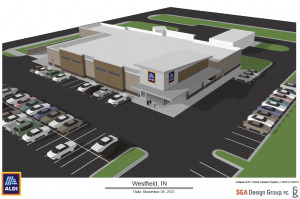
The discount grocer, which has 82 stores in Indiana, is seeking approval to build a 20,000-square-foot store in the fast-growing north-side suburb.
In a statement Monday, Kroger said it was delaying its timeline for closing the $25 billion deal due to ongoing dialogue with regulators, including state attorneys general and the Federal Trade Commission.