Holcomb appoints state’s first education secretary
Katie Jenner, who is an adviser to Republican Gov. Eric Holcomb, formerly served as a vice president at Ivy Tech Community College.
The increased difficulty of finding substitutes is forcing districts to more frequently shift their staffing, with teachers who provide instruction in specialized classes instead being drafted to fill in for absent teachers.
IBJ reporter Samm Quinn talked with Superintendent Aleesia Johnson about how returning has gone so far and other impacts COVID-19 has had on the state’s largest public school system.
The grant will support NASA student internships and fellowships, student STEM experiences, faculty STEM projects and public STEM engagement throughout Indiana through 2024.
With four seats on the seven-member board up for election, the outcome could easily shift the balance of power in the district.
Here are six companies and one not-for-profit organization from central Indiana that are experimenting in the ed-tech sector.
The program traditionally combines in-school lessons from teachers with a two-day event at the Indiana State Fairgrounds, where more than 10,000 students explore interactive projects and exhibits set up by more than 100 companies and 1,000 volunteers. This year, it’s going online.
Standard for Success, a Cloverdale-based educational software company, through 2019 has been growing at a strong double-digit clip and earlier this year launched a new service line company officials are confident will help the firm expand further by signing deals with colleges and universities nationwide.
The plan is based on improved coronavirus data in Marion County. The city’s average positivity rate—the percentage of people who test positive for the coronavirus—has hovered near 5% for several weeks, according to state data.
In 1983, a chess team from IPS School No. 27 took on an elite private school from Manhattan in the National Elementary School Chess Championship—and won.
With school re-openings—or partial re-openings—just around the corner, many parents are wondering how they can help their children wade back into the world.
Indianapolis-based Synovia Solutions’ latest platform—Bus Guardian—helps with contact tracing and hygiene verification for school buses.
But the leader of the Indiana Senate doubles down on his statement that he can’t guarantee full funding for schools that don’t offer an in-person option for students.
As schools across the country announce their plans for the fall, working parents are forced to choose from an array of bad options: Send your kids back to school, if it’s open, and risk coronavirus exposure—or keep them home with little or no supervision as you try to simultaneously parent, do your job and monitor your child’s online schooling.
The coronavirus pandemic, which shut down most of the nation’s schools in March, has provided parents who might have never considered home-schooling with a test drive of what it’s like to have the kids learning at home.
State leaders say Indiana schools can reopen safely in the fall if they screen students and staff, create individual health plans, and maintain social distancing, according to newly released re-entry guidelines.
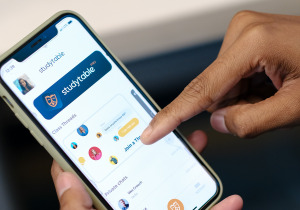
The company has received an anonymous $500,000 donation that it will spend to expand its Learning Commons tutoring program to 10 more schools in Indiana.
Throughout Indianapolis, where the school system allows parents to choose where their children attend, enrollment for the next academic year is in upheaval as families and schools grapple with urgent crises.
Even in a course fully subscribed by students from our Honors College, a class full of future doctors, business executives, computer engineers and the like, the quality of written expression was almost uniformly—sorry to choose this word—pathetic.
More than 200 of Indiana’s nearly 300 districts have closed after consultations with local health officials. But, in at least 21 states, officials have ordered closures to try to stop spread of COVID-19.