Hoosier lawmakers set for water talks in 2027
Debates about economic development’s impact on water use have intensified over the past few years in Indiana as the state has become a hub for proposed data centers and new manufacturing.
Read MoreDebates about economic development’s impact on water use have intensified over the past few years in Indiana as the state has become a hub for proposed data centers and new manufacturing.
Read MoreIf fulfilled, the proposed agreements signal an end for some potential legal roadblocks to the development of the Citizens-Lebanon Water Supply Program.
Read MoreAttendees will be asked for input on developing a regional water planning framework, enhancing Indiana’s water monitoring networks and creating an online water data and management platform.
Indiana Secretary of Energy and Natural Resources Suzanne Jaworowski told attendees at the annual Indiana Water Summit on Thursday that a pending statewide water plan must be “transparent, data-driven and developed collaboratively.”
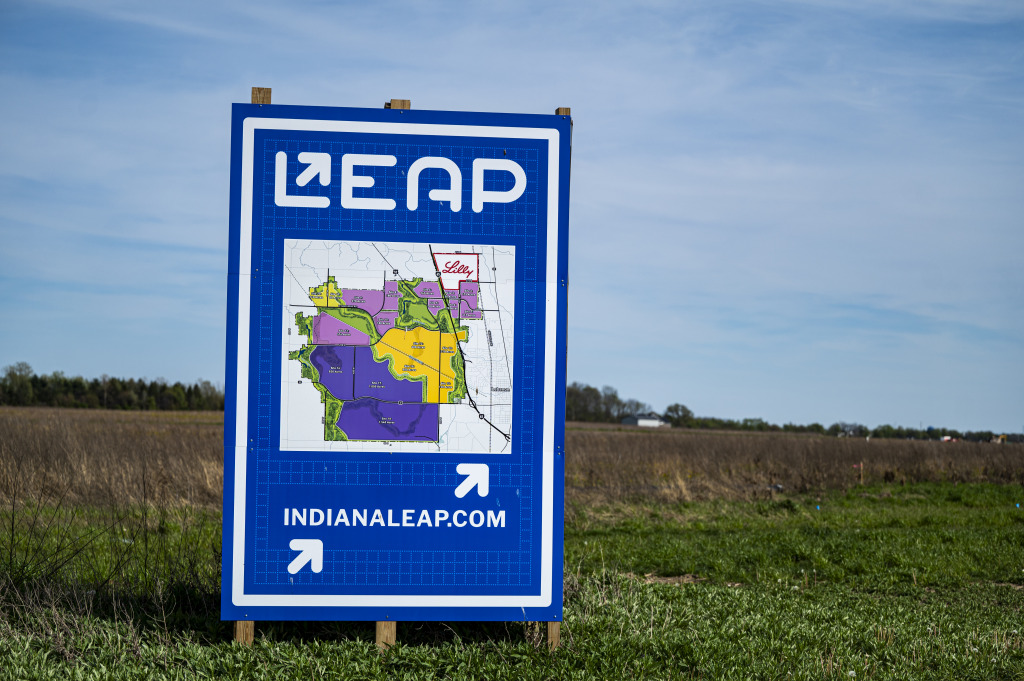
The move comes as the Indiana Economic Development Corp. faces pushback for its exploration of a plan to pump massive sums of water from Wabash River aquifers for a high-tech manufacturing district in Boone County.
The move comes as the Indiana Economic Development Corp. faces questions about its plan to tap the Wabash River aquifer and withdraw as much as 100 million gallons per day for an advanced manufacturing district in central Indiana.
The group, “Stop the Water Steal,” plans to lead a letter-writing campaign to local and state officials, urging them to stop the pipeline, slow its progress or minimize its impact on community water resources.
Powerhouse companies such as Coca-Cola, General Mills and Amazon have set water-sustainability targets but aren’t close to meeting them.
West Lafayette City Council members expressed a desire for more research from third parties and greater transparency from Indiana Economic Development Corp. officials, who they said have not approached them about the proposed pipeline.
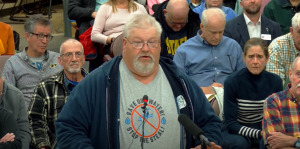
Two state lawmakers are drafting legislation that would create a permitting process and require a deeper public review of any effort in the state to pump 10 million gallons or more per day from a community’s aquifer. Meanwhile, the West Lafayette City Council is poised to consider a resolution Monday night opposing the IEDC’s plans.
Initial findings show that an aquifer connected to the Wabash River contains enough water to support a high-tech manufacturing district in Boone County without depriving the Greater Lafayette region of an adequate water supply, according to the Indiana Economic Development Corp.
A group of elected officials, business leaders and community members in the Lafayette area are drafting a letter to the Indiana Economic Development Corp. seeking details about the state’s plans to draw water from the Wabash River aquifer.
The new program, Cummins Water Works, will focus on improving access to safe water in the U.S., Mexico, Brazil, India and South Africa.
“We’re all connected—our drinking-water utilities, our industries, people who want to use water for recreation—it’s all the same water,” says Jill Hoffmann. “So we have to manage it together.”
The utility already has begun work on the project in an 88-acre former limestone quarry, which could provide another 25 million gallons of water per day when the reservoir opens in 2020.
Indiana is generally water-rich, but advocates of resource planning say the state runs the risk of supply crises that would hamper economic development.
Beginning Wednesday, city residents can water their lawns, wash their cars and fill swimming pools without facing fines. Fishers also lifted its conservation order, effective Saturday.
Citizens Water is considering changes in the way it bills customers to conserve water during future droughts. Among the changes could be periodic rate hikes to discourage heavy usage on peak days.
Citizens Water engineers are considering various methods, both short-term and long-term, to meet increasing demand on the water supply of Indiana’s largest metro area, which might need 50 million gallons more water per day as early as five years from now.
Indiana officials on Thursday decided against expanding a water shortage warning even though more than 80 percent of the state is in a severe drought.
Indianapolis Mayor Greg Ballard is banning lawn watering in the city beginning Friday, and all smoking has been banned during a county fair in central Indiana because of the conditions caused by this summer's drought.
Preservationists want protections for the historic waterway, but the utility that just bought it is afraid National Register status will cause unintended consequences.