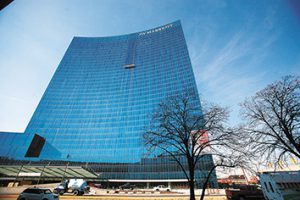
The entire market saw a 68% drop in occupancy from the week of March 1-7 to the week of March 29-April 4, according to data from Tennessee-based hotel research firm STR.
In Indiana, 118,184 claims were made in the week that ended April 11, down from 127,010. The state was typically seeing less than 3,000 claims per week before the outbreak.
While the NFL has just begun pondering a shortened season, the other major U.S. leagues are already in various stages of exploring their most feasible paths to resumption.
Cincinnati-based Jetha Group is building the hotel near five other established or planned hotels in Whitestown, and town officials think there’s room for more.
Automobile and clothing store sales collapsed during the month, the Commerce Department said Wednesday. Sales at restaurants and bars also plummeted. But grocery store business soared.
Many parents who now work remotely have been forced to manage their duties as employees, spouses and parents all at the same time and all in the same place. Podcast host Mason King asks human resources expert Liz Malatestinic and local families for strategies for staying organized and ahead of potential meltdowns.
The Capital Improvement Board of Marion County and Visit Indy said they are implementing several cost-cutting maneuvers ahead of expected drops in tax revenue over the next several months.
The problem is that our current systems—the ones that do everything from keeping grocery stores stocked to hospitals functioning—are optimized to work very, very efficiently under normal conditions. But not necessarily when things go sideways.
This photo taken on Dec. 10, 1942, shows the inside of a liquor store at the Claypool Hotel, although the description does not name the store. It could be the Estates Liquor store, which was located in the building for decades.
The Indianapolis-based hunger relief organization has seen demand for its services soar because of the coronavirus pandemic. The health crisis has forced the group to convert its biggest annual fundraiser into an online event.
Consumer prices saw their largest monthly decline in five years, revealing the downward pressure that the coronavirus pandemic is exerting on the cost of gasoline, airfares, hotel rooms and other goods and services.
The Capital Improvement Board is significantly scaling back the first phase of a $360 million Bankers Life Fieldhouse renovation as uncertainty about working conditions and the NBA season have thrown a wrench into the construction schedule.
In Indiana, 133,639 people filed unemployment claims in the week ended April 4, down from 139,174 the previous week, and way up from 75,522 the week before that.
State officials declined to provide details on specifically how the hotel is being used—including whether it is a treatment site for homeless individuals—to protect patient privacy.
State unemployment specialist Josh Richardson talks with host Mason King about who is now eligible for benefits under an expansion approved by Congress as well as how soon they’ll begin receiving benefits and how the agency is adjusting to a flood of applicants.
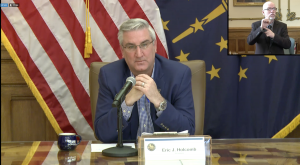
Gov. Eric Holcomb acknowledged the state is facing a potential mental-health crisis, and said he is committed to offering services to Hoosiers who are feeling troubled.