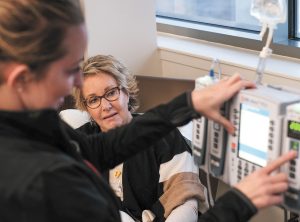
More Americans dying at home rather than in hospitals
Deaths in nursing homes also have declined, according to Wednesday’s report in the New England Journal of Medicine.
The facility to be built off State Road 46 on Terre Haute’s east side will combine currently separate primary care and mental health clinics. It will be equipped to serve 10,000 veterans.
Facing intense pressure to answer questions about his work in the private sector, Democratic presidential contender Pete Buttigieg on Tuesday disclosed a roster of former consulting clients that include a major health insurance provider.
The Indianapolis Motor Speedway announced Tuesday that it has struck a multi-year naming rights deal for the Grand Prix of Indianapolis.
Planned Parenthood of Indiana and Kentucky Inc. is among the organizations that have petitioned the courts in opposition to the ultrasound law.
Indiana currently ranks highest in prices paid to hospitals by private health insurance plans, according to The Journal Gazette, but the problem is not the actual cost or charge of a procedure—it’s what individuals ultimately pay after insurance.
Though modest, it was the first such price drop in 45 years, according to nonpartisan economic experts at the federal Department of Health and Human Services, who deliver an annual report on the nation’s health care spending.
Nukemed Inc., doing business as SpectronRX, plans to acquire a vacant 68,000 square-foot building at 9550 Zionsville Road, where it will produce lifesaving medicine for children through a partnership with New York-based Y-mAbs Therapeutics.
Indiana plans to seek federal approval to continue a health insurance program that covers about 418,000 low-income residents amid a pending lawsuit that could eliminate nearly all of the program’s funding.
Group One Thousand One LLC, an Indianapolis-based insurance holding company, announced plans Tuesday to expand local operations into the Zionsville building beginning next year.
Pete Buttigieg unveiled a proposal Tuesday to correct troubling health disparities among African-Americans and Hispanics—a crucial constituency to win over to have any hope of securing the Democratic presidential nomination.
Three years after Indiana passed a law allowing doctors to prescribe drugs for patients without an in-person visit—using a computer, smartphone, video camera and similar technology—some health systems around the state are reporting higher use of virtual visits. St. Vincent, for example, sees hundreds of patients a month remotely for ailments ranging from minor rashes and sprains to follow-up visits for strokes.
As open enrollment goes into the home stretch Thanksgiving week, critics say the new tool can create confusion by obscuring out-of-pocket costs that seniors should factor into their decisions.
Like a string of previous debates, Wednesday’s prominently featured squabbles over a program that could alienate general-election swing voters who may be wary of fully government-run, universal health care.
The pharmaceutical giant says it needs additional manufacturing capacity to keep up with demand for current medicines and new drugs expected to emerge from its pipeline.
The group adopted the sweeping stance at a policy-making meeting in San Diego. It aims to lobby for state and federal laws, regulations or legal action to achieve a ban, but the industry is sure to fight back.
A Gallup-West Health poll finds that 66 percent of adults don’t believe the Trump administration has made any progress, or very much progress, in limiting the rising cost of prescription drugs.
From a look at the numbers, Indiana is not a great place to buy health coverage through the Affordable Care Act marketplace.
Joe Anderson, 62, is executive director of protective services for Methodist, University and Riley hospitals, responsible for physical security for more than 4,500 employees and property of more than 10 million square feet.
New rules from the Trump administration would require insurers and hospitals to disclose upfront the actual prices for common tests and procedures. The sweeping changes face stiff pushback from the health care industry and could be challenged in court.