
Indiana’s state police, prisons and more ink immigration enforcement agreements with ICE
A trio of Indiana agencies have signed up for federal immigration enforcement powers, Indiana Gov. Mike Braun announced Friday.
A trio of Indiana agencies have signed up for federal immigration enforcement powers, Indiana Gov. Mike Braun announced Friday.

Families, nonprofits, churches and businesses are asking their attorneys on how to plan ahead if confronted by Immigration and Customs Enforcement agents.

The letter confirmed the Trump administration’s plans to utilize military bases amid a capacity crisis in federal immigration facilities.

More than a quarter of an estimated 4 million nursing assistants, home health aides, personal care aides and other so-called direct care workers are foreign born.
The move is part of a broad effort to limit access to federal benefits for immigrants who lack legal status.
The shift suggests Trump’s promise of mass deportations has limits if it threatens industries that rely on workers in the country illegally.
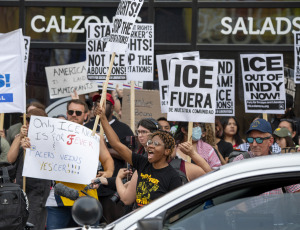
The protest was organized by a group called Indy Liberation Center, which says it wants to end ICE raids and funding.
Using Edinburgh’s Camp Atterbury instead of local jails could save the federal government money amid aggressive immigration sweeps.

The ruling affects migrants from Cuba, Haiti, Nicaragua and Venezuela who have been allowed to live and work in the United States while their immigration cases play out.
U.S. Immigration and Customs Enforcement said that even with the cost of the stipend, a “self-deportation” would decrease the cost of a deportation by about 70 percent.

Mentions of “immigration” on earnings calls from S&P 1500 companies have surged to a record high during the first quarter.

The Indiana attorney general told Hoosiers that the important funding streams that help Indiana’s low-income and special needs students will still exist and be handled by other agencies.

The 44,144 residents added in 2024 represent Indiana’s largest one-year increase since 2008.

During the first meeting of his second-term Cabinet, President Trump suggested that the new revenue generated from the program could be used to help pay off the country’s debt.

The bill would also ban employers from “knowingly or intentionally” recruiting, hiring or employing people not authorized to work in the U.S.
Indiana Attorney General Todd Rokita has advised IMPD and IPS to “discontinue policies and practices that limit their ability to cooperate with federal immigration authorities, or else face legal action from his office.”
Out of the over a dozen immigration-related bills filed this session, lawmakers ultimately have supported legislation that aids in the enforcement and detainment of people who are in the country illegally.

Also past the halfway point are bills on voting, water transfers and teacher pay. The House, meanwhile, pulled back on divorce and municipal election changes.
Immigration-related executive orders issued by both President Donald Trump and Gov. Mike Braun have prompted at least one Indiana organization to adjust its day-to-day operations.
Since his Jan. 20 inauguration, the new president has fired off a flurry of executive orders and immigration-related announcements.