
Kroger names former Walmart executive as its new CEO
The new hire is the first permanent CEO since the company’s former leader Rodney McMullen resigned amid an internal ethics investigation last March.
Read More
The new hire is the first permanent CEO since the company’s former leader Rodney McMullen resigned amid an internal ethics investigation last March.
Read More
The grocer said this month it will open 180 locations across 31 states this year, including in new markets in the Southeast and West. It’s goal is to have 3,200 stores by the end of 2028.
Read More
The U.S. Food and Drug Administration said four companies continued to sell the infant formula for days or weeks, despite a Nov. 11 recall of all products in the outbreak that has sickened more than 50 babies in 19 states.
Until now, DoorDash was only delivering sushi from 900 Kroger stores and flowers from 1,700 Kroger stores. But soon, Kroger’s full assortment will be available to DoorDash customers.
Kroger said in Tuesday’s court filing that it should not be forced to pay Albertsons a $600 million termination fee as well as billions of dollars in legal fees.
The Kroger Marketplace store would be in Zionsville, while the Kroger Fueling Center would be in Whitestown despite being nearly adjacent to each other.
Rodney McMullen, 64, began his career with Kroger in 1978 as a part-time stock clerk and bagger. He was named Kroger’s CEO in 2014 and became the company’s chairman the following year.
Kroger and Albertsons in 2022 proposed what would be the largest grocery store merger in U.S. history. But the Federal Trade Commission sued earlier this year, seeking to block the $24.6 billion deal.
Kroger is waiting for a federal judge to rule on its proposed acquisition of Albertsons for about $24.6 billion, a deal it announced more than two years ago.
The Federal Trade Commission argues the deal would eliminate competition and lead to higher food prices for already struggling customers.

The two companies proposed what would be the largest supermarket merger in U.S. history in October 2022. But the Federal Trade Commission sued to prevent the $24.6 billion deal, alleging it would eliminate competition and raise grocery prices.
The recalls are tied to an ongoing outbreak of listeria poisoning that has killed two people and sickened nearly three dozen in 13 states, according to the U.S. Centers for Disease Control and Prevention.
It’s unclear if the new plan will satisfy regulators. In February, the U.S. Federal Trade Commission sued to block the $24.6 billion merger between the grocery giants.
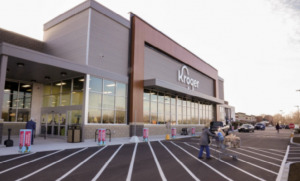
Kroger said the specialty pharmacy business is separate from its in-store retail pharmacies and The Little Clinics, which are not included in the proposed sale.
Plans call for the Star Brick Village retail and residential development to be built on 72 acres along East 146th Street, just north of Fishers.
In a statement Monday, Kroger said it was delaying its timeline for closing the $25 billion deal due to ongoing dialogue with regulators, including state attorneys general and the Federal Trade Commission.
The plan calls for expanding the 75,000-square-foot Kroger store by 50,000 square feet, constructing 75,000 square feet of additional retail space, and adding a Kroger fuel station and retail buildings along 146th Street.

Mix Food Hall locations, which offered menu items from several restaurants and filled them through online ordering, have shut down less than a year after opening in Hamilton County.
Plans call for the 120,000-square-foot store to fill a site formerly occupied by defunct grocery Marsh Supermarkets and replace a much smaller Kroger store across the street.

Kroger plans to move from its store at 7272 Fishers Crossing Dr. across Allisonville Road to the site of a former Marsh Supermarkets store, according to a consultant’s study commissioned by city officials.
Kitchen United describes Mix Food Hall as the “nation’s first multi-restaurant ordering to-go experience.”
Kroger announced its plan to acquire Albertsons for $20 billion in mid-October. Together, the companies would control about 13% of the U.S. grocery market.