
Q&A: Keeping you safe from a Nigerian prince
As a fraud investigator at Elements Financial, Andy Shank is fighting against perpetrators who he says are largely anonymous, overseas and unlikely to be caught.
As a fraud investigator at Elements Financial, Andy Shank is fighting against perpetrators who he says are largely anonymous, overseas and unlikely to be caught.
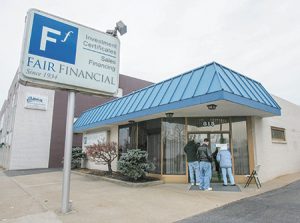
Without a big settlement, or a resounding victory at trial, victims in the fraud would be left with an underwhelming recovery—currently 11 cents on the dollar, based on distributions of $18 million in December 2015 and $5 million last October.
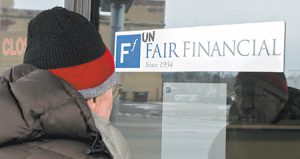
Investors in the Durham-owned Fair Finance Co. are slated to receive an additional $5 million soon, boosting their recovery to $23 million—which works out to about 11 cents on the dollar for their $208 million in losses.
The convicted Ponzi scheme leader again is asking a federal court to vacate the sentence, this time claiming his lawyer failed to adequately represent him.
The civil lawsuit had been on hold until last year, when Durham finally exhausted his appeals in a criminal case that culminated with the Indianapolis businessman’s sentencing in 2012 to 50 years in prison.
Philadelphia-based PalmStar Media has bought National Lampoon Inc., a deal that severs the final ties between the company and a contingent of Indianapolis shareholders, including convicted fraudster Tim Durham.

The 14,480-square-foot home was once a party pad for the infamous financier. The Fishers couple who bought it in 2015 is now selling after making several improvements.
Rick D. Snow—who was convicted in 2012 of helping Tim Durham and Jim Cochran loot Fair Finance Co. but didn’t raid the company’s coffers himself—is seeking to get his 10-year sentence reduced.
An appeals court ruling has cleared the way for Fair Finance Co.'s bankruptcy trustee to revive a lawsuit against one of the company's lenders,a Fortune 500 company with extensive resources. The trustee was able to extract a $35 million settlement from another one of the company's lenders.
The Indianapolis financier convicted of operating a Ponzi scheme failed to persuade a federal judge to dismiss the government’s civil action against him and other convicted accomplices.
A federal appeals court has rejected a former Indianapolis businessman's bid to shorten his 50-year sentence for defrauding investors of more than $200 million.
Dr. Dale Guyer—who was thrust into the spotlight this week after a news report suggested his Indianapolis clinic provided HGH to Peyton Manning—borrowed heavily from convicted Ponzi schemer Tim Durham, starting in 2003.

The $18 million payout to some 5,000 investors in Fair Finance Co. represents a recovery of about 9 cents on the dollar.
Convicted Ponzi scheme leader Tim Durham appeared in federal court in Indianapolis for a resentencing hearing Friday afternoon following the September dismissal of two fraud counts by the U.S. Court of Appeals.
When Judge Jane Magnus-Stinson sentenced Durham to 50 years in 2012, she said there was no point to handing down a sentence that was a multiple of his likely life span.
The deal would resolve a 2011 lawsuit accusing former Indianapolis businessman Tim Durham of using Fair Finance funds to prop up National Lampoon. He is a former CEO of both companies.
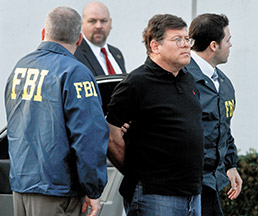
The bankruptcy trustee had accused Fortress Credit Corp. of turning a blind eye to Tim Durham's Ponzi scheme because it was making millions of dollars and held first liens on the only company assets with real value.
The company's bankruptcy trustee said in a court filing that it is "highly doubtful" Laikin would have the financial wherewithal to pay more than the settlement amount.

The show, which airs at 10 p.m. Thursday, follows Durham’s path from his modest roots in Seymour, Indiana, through his quest to become the world’s richest businessman to his arrest and conviction for running a $200 million Ponzi scheme.
The ruling is a big setback for bankruptcy Trustee Brian Bash, who has yet to provide any recovery to the more than 5,000 Ohio residents who lost more than $200 million when the Tim Durham-led company collapsed in 2009.