
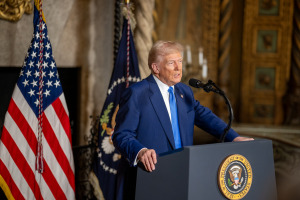
Trump says he’ll delay threatened 50% tariff on European Union until July
In a social media post Friday, Trump had threatened to impose the 50% tariff on EU goods, complaining that the 27-member bloc had been “very difficult to deal with” on trade.
In a social media post Friday, Trump had threatened to impose the 50% tariff on EU goods, complaining that the 27-member bloc had been “very difficult to deal with” on trade.

Retailers are trying to navigate their way through economic uncertainty in 2025.
Says former Gov. Mitch Daniels: “If [tariffs are] the way of getting the attention of trading partners, … then I can understand it. All I can say is, if that’s the game, then it better work fast.”
More than half of the monthly increase in April was fueled by a 0.3 percent increase in shelter costs, the labor department said.
Representatives from Eli Lilly, Cook Medical and other Hoosier businesses gave advice about tariffs during the Indiana District Export Council’s annual trade and business conference Thursday at Newfields.
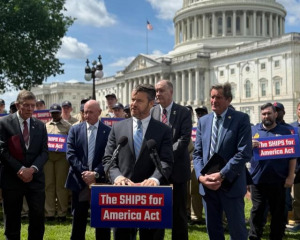
Young, R-Indiana, and fellow Sen. Mark Kelly, D-Arizona, reintroduced legislation to jumpstart the country’s “rusted” shipbuilding industry and increase onshore ship production that has largely shifted to China.

First-quarter growth was slowed by a surge in imports as companies in the United States tried to bring in foreign goods before President Trump imposed massive tariffs.
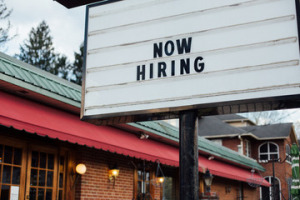
Meanwhile, the number of Americans quitting their jobs—a sign of confidence in the economy—rose modestly. And layoffs fell to the lowest level since June.

The figures reflect a rapidly souring mood among consumers, most of whom expect prices to rise because of the widespread tariffs imposed by President Donald Trump.
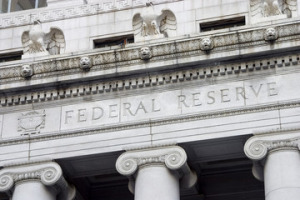
The message, posted early Thursday, came one day after Fed Chair Jerome Powell warned that the administration’s trade war was “highly likely” to spur a temporary rise in inflation.

Federal Reserve Chair Jerome Powell quoted Ferris Bueller during a speech about policy changes to the Economic Club of Chicago on Wednesday.
The share of respondents expecting unemployment to rise in the coming months increased for the fifth straight month and is now the highest since 2009 during the Great Recession.
U.S. inflation declined last month as the cost of gas, airline fares, and hotel rooms fell, a sign that price growth was cooling even as President Donald Trump ramped up his tariff threats.

President Donald Trump comments are a sign the White House is closely monitoring market reaction to the administration’s sweeping reciprocal tariffs, which went into effect at 12:01 a.m. Wednesday.

Few sectors were spared in trading Friday, a day after U.S. companies lost $2 trillion in value.
The unemployment rate rose modestly but for what economists consider a good reason: 232,000 people entered the labor force.
The spending increase was driven by greater purchases of long-lasting goods, such as cars and appliances, which could reflect an effort by shoppers to buy things before tariffs are imposed.

A drop in business inventories shaved 0.84 percentage points off fourth-quarter GDP growth.
The Conference Board’s report Tuesday said that the measure of Americans’ short-term expectations for income, business and the job market fell 9.6 points, to 65.2.

An economic bellwether because of its broad exposure to the global economy, FedEx said its latest outlook assumes the global economic, political and trade environment doesn’t worsen any further.