
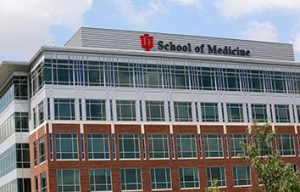
IU medical school wins $49M grant to continue Alzheimer’s studies
The money will be used to study animal models of late-onset Alzheimer’s disease as well as perform rigorous testing of potential therapeutics in animals.
The money will be used to study animal models of late-onset Alzheimer’s disease as well as perform rigorous testing of potential therapeutics in animals.
Researchers in the field of colorectal cancer are hailing the study, published Sunday in the New England Journal of Medicine, as a groundbreaking development that could lead to new treatments for other cancers as well.
U.S. District Judge Norman Moon said the evidence from federal inspections shows more than 300 beagle puppies have died at the facility, which is owned by Indianapolis-based Envigo, over the last seven months of unknown causes.
Repeated federal inspections since Envigo acquired the facility have resulted in dozens of violations, including findings that dogs had received inadequate medical care and insufficient food, were housed in filthy conditions, and some had been euthanized without first receiving anesthesia.
Brooke Beier, senior vice president of commercialization at the Purdue Research Foundation, said FDA approval of the therapy is one of the most meaningful approvals ever for a Purdue-related innovation.
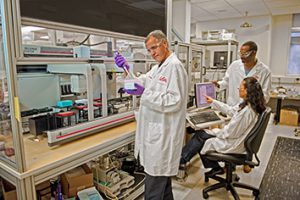
The FDA has agreed to speed up review of donanemab, but the Centers for Medicare and Medicaid Services is moving to limit reimbursement for drugs in this class to only patients in clinical trials.
“We found no links between COVID outcomes and democracy, populism, government effectiveness, universal health care, pandemic preparedness metrics, economic inequality or trust in science,” a researcher said.
Data analysis by a team of medical professionals across the country indicates primary ciliary dyskinesia, or PCD, is twice as common as previous estimates, occurring in one of about every 7,500 people.

The collaboration will explore incorporating “smart fibers” into Cook Medical’s products to facilitate continuous, real-time monitoring of various bodily functions during procedures.

Indianapolis’ newest publicly company, Point Biopharma Inc., is the latest player in a field expected to see explosive growth as doctors and researchers look for new ways to shrink tumors.
With the help of a $2.3 million grant, Purdue University animal science professor Shihuan Kuang’s research will continue in an effort to better understand the origin and function of these newly-discovered stem cells.

The use of COVID antibodies has fallen across the United States lately and, along with it, Lilly’s sales in that category.

Lilly has spent three decades and more than $3 billion trying to find a way to treat Alzheimer’s disease. Its latest drug, donanemab, finally shows real promise.
Ossium Health wants to build a huge bank of bone marrow and stem cells from deceased organ donors to treat patient with blood cancers and to improve organ transplantations.
A startup that’s planning to launch a $60 million drug-manufacturing plant sees big growth in contract manufacturing.
The medical school said it is testing the use of tezampanel, an experimental drug for migraines developed by Indianapolis-based drugmaker Eli Lilly and Co., to treat opioid withdrawal syndrome and other addictions and mental illnesses.
Some of the vaccine trials in the United States are taking place at Indiana University School of Medicine in Indianapolis.
The grant will help fund an ongoing study to evaluate long-term health outcomes for cancer patients who receive life-saving chemotherapy treatments that often have difficult side effects.
Under the agreement, researchers will study patients who used Lilly autoimmune therapies that are under consideration for the treatment of other autoimmune diseases, including inflammatory bowel disease and psoriasis.
West Lafayette-based Bioanalytical Systems’ latest executive departure comes amid recent signs of stability, turnaround and growth for a company that just three years ago was on the verge of sinking.