Summer hours are perk small businesses can offer workers to boost morale
Reduced hours in the summer months can also enable smaller businesses to stand out to prospective employees in a competitive talent marketplace.

Reduced hours in the summer months can also enable smaller businesses to stand out to prospective employees in a competitive talent marketplace.
It’s no secret that golf builds business connections unlike anything else.
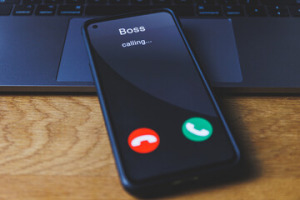
Technologies that were adopted to help employees connect to their managers and colleagues remain in place regardless of whether people are working remotely or from the office. As a result, workers are more connected than ever and often feel pressured to respond at all hours.
About 70% of employers responding to a Franklin Templeton survey said they had recently increased the number of or quality of their benefits, and 65% described their benefits as “quite competitive.”

The Franklin facility also saw major job reductions in October, when Energizer ceased its packaging operations at the site.

In the name of inclusivity, business leaders are opting for year-end celebrations cut totally free from seasonal connotations. And dropping liquor reduces the potential for unprofessional behavior.
A recent brain-monitoring study supports the phenomenon, finding a connection between videoconferencing in educational settings and physical symptoms linked to fatigue.

The National Federation of Independent Business’ “optimism index” in September was listed at 90.8, which is lower than the group’s 49-year average—98—for the 21st consecutive month.
Union leaders want promises from the Big Three automakers that their wave of new electric vehicle battery plants will fall under the UAW’s contract and that workers at those plants will make UAW assembly wages of $32 an hour.

Advances in technology traditionally have had the biggest impact on more physical jobs, but generative AI tools will likely be most disruptive for jobs that require brains, not brawn.

Darrian and Devyn Mikell discuss the inspiration they’ve received from their family (including an older brother with a Pro Bowl career in the NFL); how they handle the rollercoaster of startup life; obstacles that Black entrepreneurs face; and the importance of a diverse staff.

Employers have new leverage as the labor market has cooled, leaving workers less room to be choosy.

After peaking early this year, the number of tech industry layoffs—and the number of companies cutting those jobs—appears to have slowed in recent months.

More than ever, Indianapolis-area companies are becoming so-called “second-chance employers” willing to hire people with arrest records and providing additional services to ex-offenders needing first jobs.

The IU School of Medicine scored a major coup five years ago when it recruited one of the nation’s top experts in the fast-growing field of regenerative medicine. But the University of Pittsburgh recruited him away this spring.

An overwhelming 93% of respondents at least somewhat agreed that it “makes good business sense” to recognize and respond to mental health dilemmas, but far fewer said they were prepared.
Pregnant workers employed in Indiana now have access to guaranteed accommodations after the Pregnant Workers Fairness Act, a federal law that went into effect Tuesday.

Large companies from Adobe to IBM to Deloitte have dropped the yearly evaluations in favor of more frequent, informal check-ins.
As larger companies continue to harden their return-to-office mandates, the flexibility uniquely offered by small businesses might become increasingly attractive to job seekers.
Since 2019, the proportion of retirees in the U.S. population has risen from 18% to nearly 20%—equivalent to about 3.5 million fewer workers. And the trend seems sure to accelerate.