

Other cities scramble to erect field hospitals, but Indy remains mum
IUPUI said Monday it is cleaning and sanitizing University Tower to house health care workers, but no plans have been announced locally for temporary field hospitals.
IUPUI said Monday it is cleaning and sanitizing University Tower to house health care workers, but no plans have been announced locally for temporary field hospitals.
State officials again refused to say how many ventilators or intensive-care unit beds hospitals have, citing confidentiality agreements with hospitals and vendors. Some hospitals expect their supplies to run short in coming weeks.

As Indiana state health commissioner, Dr. Kristina Box finds herself in the spotlight as the highest-ranking public health official in the state during the pandemic, which threatens to overwhelm hospitals.

Officials at Otterbein Franklin SeniorLife Community say a nurse and therapist also tested positive and are recovering at home.
The move comes as doctors, nurses and hospitals across the country plead with federal officials to provide more critical medical supplies.
As in other states, tests are being reserved for health care workers and people with strong symptoms who have been in contact with someone who has tested positive.

The drugmaker did not say whether it might broaden the testing in the future to include non-health care workers.

This area has 1,081 intensive care unit beds, but they could be filled by coronavirus patients within weeks under numerous scenarios mapped out by the Harvard Global Health Institute.
State officials have taken sharp criticism in the last week for the slow pace of testing. Through Tuesday, the Indiana State Department of Health had conducted 193 tests, out of which 39 were presumed positive.

Under the hot glare of television lights, before dozens of reporters and spectators at the Indiana Statehouse on Monday afternoon, Indiana Gov. Eric Holcomb began talking of war, combat and a long, hard, struggle ahead.
Just like the pandemic that is sweeping the world, news about COVID-19 is developing almost too quickly to comprehend.
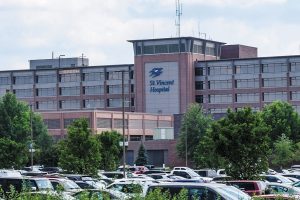
Ascension St. Vincent, Community Health and Franciscan Health have confirmed plans to restrict elective procedures to shore up critical supplies and keep the virus from spreading.

Increasingly, as the planet warms, pressure is building from environmentalists, investors, consumers and the general public for corporate America to do something about it.
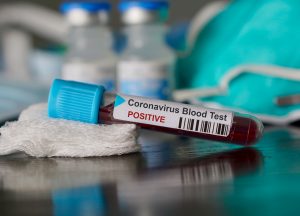
Thousands of people are calling hospitals and state health offices with concerns, but as of Thursday evening, only 64 Hoosiers had been tested—or about 0.00009% of the Indiana population. The tests have resulted in 12 positive cases.
The Indianapolis-based drugmaker said it will combine its capability for quickly developing antibodies with AbCellera’s “rapid pandemic response platform,” with the goal of getting a treatment into clinics for human testing within four months.
Around Indiana, hospital officials say they have stepped up safety precautions in the wake of the COVID-19 outbreak. But even amid extensive preparation, some acknowledge that if the disease spreads quickly, it could test their facilities.
The bill comes as large utilities across Indiana have announced plans to shut down thousands of megawatts of coal-fired generating capacity in favor of cheaper fuel sources, such as natural gas, solar and wind.

The Maryland-based company, which is the nation’s largest liquor retailer, claims Indiana’s residency requirement is unconstitutional and amounts to economic protectionism.

The Indiana University School of Medicine plans to leave its longtime home on the IUPUI campus and move about two miles north as part of a new “academic health campus” near Methodist Hospital.
The patient is from Hendricks County and attended a BioGenconference in Boston, where numerous other cases of COVID-19 have been reported.